K-drama romance fantasy gets sold as spectacle. A three-hundred-year-old spirit wakes up inside a struggling actress. A physician moonlights as a masked vigilante the crown is hunting. A cursed bracelet swaps two souls overnight. Strip the costume away, though, and the plot underneath is almost always the same small question asked for sixteen episodes straight: can this one specific person end up with that one specific person. Western high fantasy tends to ask who gets the throne. Korean romance fantasy asks who gets to keep this person’s ordinary life, and then spends every episode making that answer illegal. Two of this year’s biggest entries in the genre, SBS’s My Royal Nemesis and KBS2’s To My Beloved Thief, show exactly how that machine is built, and why the machine matters more than the magic powering it.

The rule that makes love illegal is the whole plot
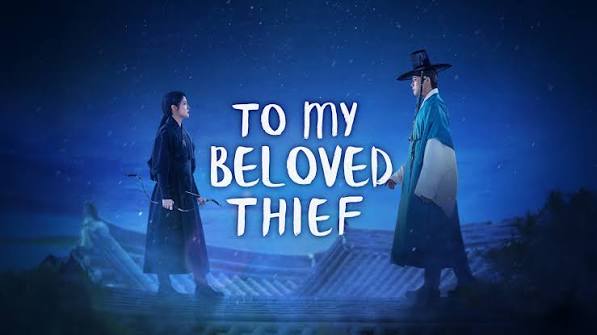
Every K-romance fantasy that actually works runs on one non-negotiable rule, and the rule’s only real job is to stop the two leads from simply talking things out over dinner in episode three. In My Royal Nemesis, a Joseon-era concubine named Kang Dan-shim dies by poison in a scene violent enough to trigger a midsummer frost and a total lunar eclipse, then wakes up three hundred years later inside the body of Shin Seo-ri, a struggling modern actress. The rule is not simply “reincarnation happens.” It is that Dan-shim is already living someone else’s engagement, someone else’s career, and someone else’s face before she ever meets the ruthless chaebol heir Cha Se-gye. Falling for him means falling for him as a fraud twice over, in two different centuries at once. In To My Beloved Thief, physician Hong Eun-jo spends her days healing patients and her nights robbing corrupt officials as the vigilante Hong Gil-dong, which happens to be the exact criminal that Prince Yi Yeol has been personally assigned to capture. A mysterious bracelet eventually swaps their souls, and that stops sounding like a gimmick the moment you notice what it does to the plot mechanically. It forces the prince to live inside the body of the woman he is hunting, and forces her to live inside the authority she has spent her whole double life avoiding.

Try a simple test on any worldbuilding rule before you trust it. Would this couple survive a confession scene in episode three without it? Remove the rule from either show and the leads could just say “I like you” over dinner and mean it. The rule is not scenery sitting behind the romance. The rule is the obstacle that the romance is built to fight.
Four pressures, not one magic system
The dramas that hold an audience for sixteen weeks are rarely running on magic alone. Underneath the spirits and curses, four separate pressures are usually turning at once. The first is an imbalance of information, where one person knows the real situation and the other does not, which is exactly Dan-shim’s position for most of My Royal Nemesis: she knows precisely what she is and where she came from, while Se-gye is falling for a woman he has fundamentally misread. The second is forced closeness that official life forbids, which is the entire engine of To My Beloved Thief once the prince assigned to arrest a vigilante starts sharing a body, and by extension a set of private hours, with the very woman he is supposed to be hunting down. The third is a ticking clock, whether that is a curse, a contract, or in Dan-shim’s case a destiny that already claimed one lifetime and seems determined to collect on a second. The fourth is a public audience that turns private feeling into public risk, a chaebol boardroom in one show, a royal court where getting caught as a thief can mean execution in the other. None of these four pressures needs magic to exist. The magic just gives Korean writers a vivid, visual shorthand for pressures that contract marriages, corporate mergers, and class gaps have always supplied in the genre’s non-fantasy cousins.

A couple built on different readings, not different sides
The most durable K-romance fantasy pairs are rarely written as two people who hate each other and slowly don’t. They are written as two people reading the exact same event and arriving at opposite conclusions. My Royal Nemesis leans on this constantly. Dan-shim has already lived, died, and been reborn once, so she reads court politics, betrayal, and affection as things that repeat in cycles whether anyone wants them to or not. Se-gye has no memory of any of that and reads the same behavior as simply erratic, calculated, or suspicious, because a modern chaebol heir has no framework for a woman who is quietly relitigating a three-hundred-year-old grudge in the middle of a boardroom. Neither character is simply wrong. They are both accurate, from inside two completely different explanations for the same woman. That gap, not raw hostility, is where the chemistry actually lives, and it is worth noticing as a writer because it survives much longer than mutual dislike does. Two characters who hate each other have nowhere to go but toward liking each other. Two characters who are both right, from different vantage points, can spend sixteen episodes slowly trading places without ever running out of material.
Care escalates. It is never just confessed
Romance fantasy rarely earns its biggest emotional beats through a spoken confession. It earns them by quietly upgrading what one character is willing to do for the other, in order, without saying so out loud. The pattern usually climbs through recognizable stages: care that starts as an obligation built into the plot, such as a bodyguard’s duty or the terms of a magical contract, then becomes efficient help once a character’s real competence gets noticed, then tips into kindness that was never actually required, then costs the character something real, whether that is reputation, safety, or standing, and only very late admits itself in public, in front of the exact audience the story spent its first half warning the couple about. Watch for that climb in the back half of both of these shows rather than waiting for a line of dialogue to do the work. In a body-swap premise like To My Beloved Thief’s, the escalation is almost built in for free, since living inside someone else’s skin is a forced crash course in noticing what they actually need rather than what you assumed they needed from the outside. The device that looks the most like a gimmick, the soul swap, is often quietly doing this specific emotional job.
The rival who offers a safer future
A weak K-romance fantasy gives its second-lead rivals nothing to offer except jealousy. A strong one gives them something genuinely reasonable to offer, which is exactly what makes them dangerous. To My Beloved Thief sets this up cleanly with Im Jae-yi, Prince Yi Yeol’s rival, and Shin Hae-rim, Jae-yi’s fiancée and the queen’s own niece. Neither character needs to be cruel to function as an obstacle. They only need to represent the version of the future that court politics would consider sensible, stable, and safe, set against a romance that is, by any official standard, reckless. That is the more useful design principle than “make the rival unlikable.” A rival who is offering the responsible choice puts real pressure on the leads, because turning that option down has to look like an actual sacrifice rather than an easy no. If the safer option looks foolish, the couple’s choice to reject it stops meaning anything.
What this structure gets right, what it risks, and one caution worth keeping
What this genre gets right, when it is working, is patience. Identity reveals, backstory, and the real shape of a curse or a swap are rationed out slowly enough that the mystery keeps generating tension instead of dumping it all in the premiere. What it risks is familiar to anyone who has watched a few of these end weakly: a rival flattened into cartoon jealousy instead of a real alternative, or a worldbuilding rule so complicated that by the finale the writers are spending more energy explaining the mechanism than paying off the relationship it was built to block. The caution worth carrying into your own writing, or just your own viewing, is to notice when a show starts explaining its rules more than it is dramatizing its consequences. That is usually the moment a romance fantasy has quietly stopped being about the couple and started being about the magic system, which is exactly backward for a genre whose entire appeal was never really about the magic to begin with.
The short version
K-drama romance fantasy is rarely a story about saving a kingdom, breaking a curse, or surviving a swap for its own sake. It is a story about whether two specific people get to choose each other once every structural, historical, and social force in the show has been built specifically to make that choice illegal. My Royal Nemesis runs that premise through reincarnation and a three-hundred-year information gap. To My Beloved Thief runs it through a body swap that turns a manhunt into forced intimacy. Different machinery, same underlying question, and that question is exactly why the genre keeps working long after audiences stop caring how the magic itself is supposed to function.
Image Source: SBS’s official My Royal Nemesis poster and stills, and KBS2’s official To My Beloved Thief poster and stills, used here for commentary and review purposes.
Data Source: Wikipedia and official network coverage of My Royal Nemesis (SBS, 2026) and To My Beloved Thief (KBS2, 2026), including cast, premise, and broadcast details.
#MyRoyalNemesis #ToMyBelovedThief #KDramaRomanceFantasy #KdramaWritingTips #KoreanDramaAnalysis #KdramaExplained #RomanceFantasy #ScreenwritingCraft #KdramaStructure #KoreanFantasyDrama