Watch enough Korean office dramas and a pattern starts to bother foreign viewers in a very specific way. Characters stay at their desks long after there is nothing left to do. Nobody leaves before the boss does. A company dinner gets treated as mandatory even when it is technically optional, and people RSVP to it the way you would to a summons. An accountant spends an entire series quietly rewriting the power structure of his own company from the inside, using nothing but a ledger. And in 2026, a team leader wins 1.3 billion won in the lottery and still shows up for his shift the next morning. None of that reads as satire to a Korean audience. Every one of those beats is pulled from something real, and four dramas in particular show exactly where it comes from.
The office is not a paycheck, it is a place in the group
Good Manager, also released internationally as Chief Kim, follows Kim Sung-ryong, an accountant who infiltrates the conglomerate TQ Group planning to embezzle funds from the inside. What makes the show work is how completely the title “middle manager” does the job for him before he says a word. Everyone in that accounting department already knows how to read that rank, what it is owed, and what it is allowed to say, and Kim exploits that shared script long before he decides to use his position to expose corporate corruption instead of profiting from it. The joke underneath the show is that a fake accountant with a real title outranks a dozen honest employees without one.
That is the starting fact under almost everything else here. A Korean job is rarely just a way to earn money. It is a socially verified place to stand, proof that you still belong somewhere, and losing it costs more than income.
Nunchi: reading the room before anyone says a word
Misaeng follows Jang Geu-rae, a failed professional Go player who lands an internship at a trading company with no real qualifications on paper, and the show is unusually precise about how much unspoken reading happens in a Korean office. Resource team head Ma Bok-ryul is so afraid of losing ground in internal politics that he takes it out on his staff constantly, and team lead Jeong Hee-seok watches him so closely, so anxiously, that he eventually shifts blame for his own mistake onto a different department rather than risk his boss’s displeasure. None of that gets said in a memo. It gets read off a face, a pause, a raised eyebrow.
That reading skill is nunchi, and it functions as real-time social intelligence rather than simple manners. Saying “no” directly costs someone their face, so silence, a hesitant “that might be difficult,” or a sudden change of subject often is the actual answer. Employees who catch that shift early avoid conflict before it starts. Employees who miss it get quietly filed away as someone who cannot read a room, which in a Korean office is its own kind of professional liability.
Face outranks feelings
The Dream Life of Mr. Kim gives this idea its clearest shape. Kim Nak-su spends the whole first act being exactly what the title promises: a man defined almost entirely by owning an apartment in Seoul and holding a department head title at a major company. The show only really begins once he loses both, and has to figure out who he is once neither is available to answer that question for him.
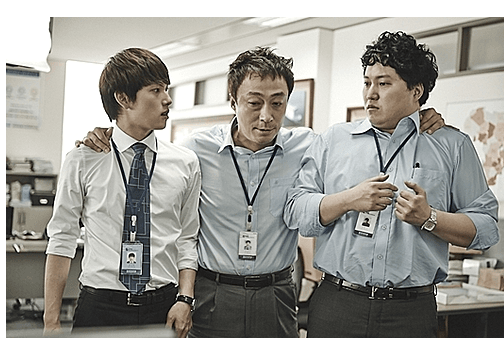
That is what face, or 체면, actually protects. It is not private self-esteem the way the term gets used in English. It is closer to an externally verified social self, the version of you that has to match your rank and role in front of other people. That is why publicly contradicting a superior in a meeting is genuinely difficult in Korean offices, why a mistake reads less as a personal failure than as damage to the whole team’s standing, and why a boss who admits weakness risks losing something structural, not just something personal.
Why the org chart beats the clock
Misaeng also shows the uglier edge of hierarchy without softening it. Ma Bok-ryul physically bullies the people under him, jabbing them with a finger, kicking at their shins, once even hurling hot coffee in anger, behavior the show does not excuse even as it depicts it as ordinary office weather at the time. Hierarchy here is not simply etiquette. It is the actual system that decides who gets to speak first, who has to wait to be asked, and how directly anyone is allowed to disagree.
Good Manager plays the comedy of that same structure in reverse. Kim Sung-ryong keeps winning not because he outranks anyone, but because he found the one language that hierarchy cannot out-argue: the number that does not lie. Watching a mid-level accountant repeatedly beat men several ranks above him is satisfying specifically because everyone watching already knows how rare that reversal actually is.
Dinner after the workday is still the workday
In Misaeng, team lead Seon Ji-young gets quietly pressured into attending a company golf outing she clearly has no interest in, because promotion tracks run through exactly those informal, after-hours rooms. That is 회식 in miniature: a dinner framed as bonding that still carries real professional consequences for skipping it. Attendance rarely feels optional even when no one says so out loud, and the person who decides when the night actually ends is almost always the most senior one at the table.
Overtime works on a similar logic. Staying late is not only about the workload still sitting on the desk. It is also a visible signal that someone has not stopped being useful for the day, and leaving first, even with nothing left to do, can read as a quiet vote that you are not fully committed to the group.
So why does even a lottery winner still clock in
Which brings the pattern to The Ordinary Jackpot, currently airing on tvN and TVING. Team leader Gong Eun-tae has been squeezed from above and below for years when he wins 1.3 billion won in the lottery, and instead of quitting, he keeps commuting with the winnings folded into his back pocket instead of a resignation letter. The official synopsis puts it almost exactly the way you would expect: the prize falls short of what full lifelong retirement actually costs in Korea’s current economy, so he treats it as “mental insurance” instead, something that buys him fearlessness at work rather than an exit from it.
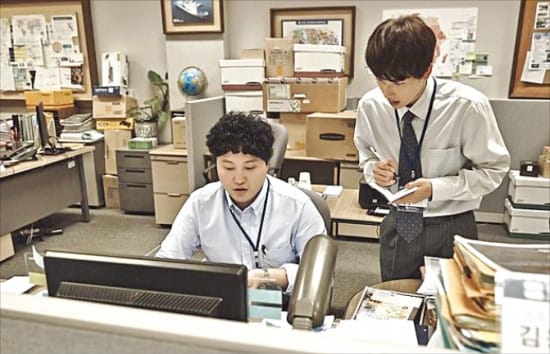
That detail is the whole argument compressed into one plot point. Money alone does not resolve what keeps someone tied to a Korean office, because the tie was never purely financial to begin with. Walking out abruptly risks the relationships, reputation, and sense of belonging that the job was quietly providing all along, and for a culture built around staying inside the group, that cost can outweigh what the money alone would buy.
The upside, the downside, and a caution worth noting
What this structure gets right is real. Clear hierarchy means junior employees usually know exactly who to ask and what channel a decision has to pass through, and once a call gets made at the top, execution can move fast because nobody is relitigating it. Shared meals and long hours, used sparingly, really can build trust that a purely transactional workplace struggles to generate.
What it costs is just as real. Information that should travel upward gets filtered and softened along the way, junior employees sit on useful pushback rather than risk their standing, and burnout tends to come less from raw hours worked than from the ambiguity underneath them, unclear expectations, unspoken emotional labor, and the constant low-grade work of reading a room correctly. If you are moving to Korea for work, or just trying to follow these dramas more closely, the most useful habit to build early is treating a boss’s silence, a vague answer, or an oddly worded refusal as real information rather than as no information at all. It usually is the message.
The short version
In Korean office dramas, work is never only a way to earn a living. It is a verified place inside a group, rank comes with genuine social weight, and reading a room correctly is treated as a real professional skill rather than a soft one. That is why a fake accountant with a real title can quietly outmaneuver his superiors, why a department head can lose himself entirely once his job title disappears, why a company dinner can feel mandatory without anyone saying so, and why a team leader with 1.3 billion won sitting in his account still sets his alarm for the next shift. In each case, walking out the door would have cost something the paycheck was never covering in the first place.

Image Source: KBS2’s official Good Manager poster and stills, tvN’s official Misaeng and The Ordinary Jackpot poster and stills, and JTBC’s official The Dream Life of Mr. Kim poster and stills, used here for commentary and review purposes.
Data Source: MyDramaList and AsianWiki entries for Good Manager and The Dream Life of Mr. Kim; Wikipedia and HanCinema entries for Misaeng and The Ordinary Jackpot; official synopses and Korean-language coverage of all four titles.
#GoodManager #ChiefKim #Misaeng #TheDreamLifeOfMrKim #TheOrdinaryJackpot #KoreanWorkCulture #KdramaExplained #OfficeDrama #KoreanCulture #WorkplaceHierarchy