
Western personal finance media talks in a fairly narrow vocabulary: budgets, credit scores, index funds, maybe a mortgage. Move through Korean life for even a few months and a completely different financial grammar shows up instead. Rent that isn’t rent, but a giant deposit you get back in full. Wedding gifts that work less like presents and more like an audited ledger. A borrowing culture split sharply between banks and something much darker. A national dream aimed less at owning a house and more at owning a building other people pay you to live in. Four recent Korean dramas happen to walk straight through all of it: tvN’s Mad Concrete Dreams, Netflix’s Karma, the tvN and Netflix co-production Typhoon Family, and Netflix’s When Life Gives You Tangerines. None of them are really about money as a subject. They are about money as the actual mechanism that decides who keeps face, who loses it, and who survives.
A deposit instead of rent
Start with jeonse, because almost nothing else on this list makes sense without it. In a jeonse arrangement, a tenant hands a landlord a lump-sum deposit that can run to fifty, sixty, even eighty percent of the home’s full value, pays no monthly rent at all for the length of the lease, and gets the entire deposit back when it ends. The landlord, in the meantime, is free to invest that enormous interest-free loan however they like. As interest rates climbed and pure jeonse became riskier for landlords to offer, a hybrid called banjeonse, or semi-jeonse, spread instead: a smaller deposit paired with a reduced monthly rent. Mad Concrete Dreams, which premiered on tvN in March 2026 with Ha Jung-woo returning to television after nineteen years, builds its entire premise on the version of this system that goes wrong. His character, small building owner Ki Su-jong, is drowning in debt after leveraging himself to buy a building, and the show names the exact real phenomenon behind it: yeongkkeul, literally “dragging up your soul,” Korean slang for people in their thirties and forties stretching every available loan to the limit on the bet that property prices only go up. Ha Jung-woo himself has said plainly that “blindly chasing overnight riches on vague hopes always comes with a steep price.” That line lands differently once you know what the actual finish line looks like in Korean culture. The aspirational endpoint was never simply owning a home the way it might be in the United States. It is becoming a geonmulju, a building owner, someone who sits on the other side of the jeonse deposit and collects it from everyone else. Ki Su-jong isn’t failing at homeownership. He is failing at the single most aspirational financial identity the culture has to offer.
Money that moves like a ledger, not a gift
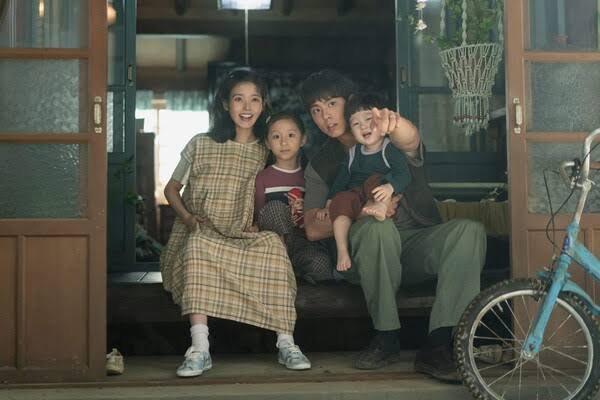
Chukuigeum, the money guests bring to a wedding, and buuigeum, the money brought to a funeral, both fall under the broader category of gyeongjosabi, occasion money tied to life’s major events. Neither functions the way a Western wedding gift or sympathy card does. The amount is implicitly tracked. It is expected to be matched, more or less, when the roles reverse and you are the one getting married or burying a parent. At most venues it is even formally recorded, your name logged in a guestbook at the door beside the envelope you hand over, specifically so the host can cross-reference it later. This is exactly why a scene in a Korean drama built around someone quietly calculating who did or didn’t show up to a wedding, or who sent money and who didn’t when a parent died, tends to carry more weight than the equivalent scene would carry in a Western show. It isn’t a lapse in etiquette being dramatized. It’s an audit of the relationship itself, conducted in cash.
Debt as a point of no return
Sachae, private curb-market lending outside the banking system, occupies a completely different emotional register from an ordinary bank loan or even credit card debt. Going to a loan shark is coded, culturally, as proof that every respectable option has already been exhausted. Karma, Netflix’s six-episode thriller from April 2025 starring Park Hae-soo, Lee Hee-joon, and Shin Min-a, uses this as its hinge point. Park Jae-yeong’s decision to arrange his own father’s murder for insurance money is triggered specifically by loan sharks closing in on him, and the show treats that moment as the exact instant an ordinary, if desperate, man crosses into irreversible crime. Typhoon Family, which aired on tvN and Netflix from October to November 2025, sets the same pressure against real history. Lee Jun-ho plays Kang Tae-poong, a carefree young heir who has to become CEO of his father’s failing textile company during South Korea’s actual 1997 financial crisis, as unpaid debts pile up, a loan shark starts demanding repayment, and Tae-poong’s own apartment gets auctioned out from under him. That crisis is not fictional texture. It is a shared national memory, a period when enormous numbers of Korean households lost homes and jobs within months, and it is a large part of why “borrowing outside the bank” still carries the specific narrative weight of total collapse rather than a routine financial setback.
Trust economies older than the bank
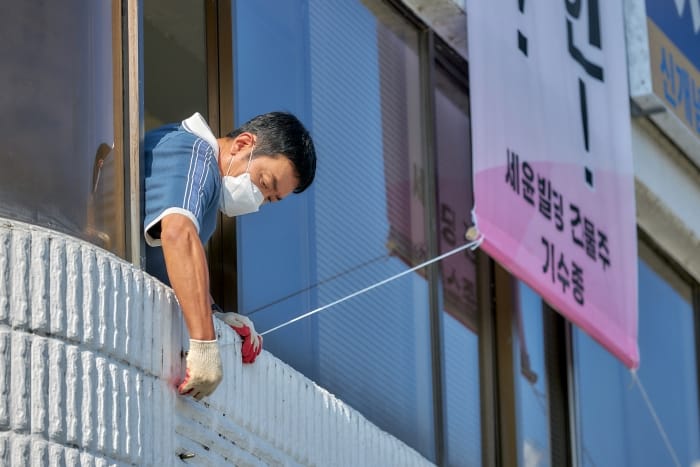
Gye is a rotating, informal credit club: a fixed group, often neighbors, market vendors, or coworkers, each contribute a set amount on a set schedule, and one member takes the entire pooled sum on a rotating basis, meaning every participant eventually plays both lender and borrower, with nothing backing the arrangement but trust and reputation. Pumasi runs on the same logic applied to labor rather than cash: unpaid, reciprocal work, historically trading a day of help in a neighbor’s rice field or at harvest for a day of help owed back later. When Life Gives You Tangerines, Netflix’s acclaimed 2025 series starring IU and Park Bo-gum, is set in exactly the kind of tightly interdependent community where both practices functioned as ordinary survival rather than quaint custom: a Jeju Island fishing and farming village, following its central family from the 1950s into the 2000s, built around haenyeo diving work and the kind of mutual dependence that small, resource-scarce villages ran on long before formal banking reached them. Versions of gye still exist today among coworkers and friend groups, usually for much smaller stakes like a shared dinner fund or a group vacation, but the underlying logic, trust standing in for collateral, hasn’t really changed.
The economy of loyalty at work
Hoesik, the company dinner and drinking occasion that can feel considerably less optional than its name implies, runs on an unwritten rule that whoever is most senior at the table pays the entire bill. Jeopdaebi, a formally budgeted corporate entertainment expense, is the line item that keeps Korean client relationships and deals moving along restaurant tables as much as conference tables. Tteokgap, literally “rice cake money,” started as a small seasonal gift genuinely meant to cover rice cakes for a holiday, and has drifted into looser use as slang for a seasonal bonus, a token gift, or occasionally a quietly implied under-the-table payment. Together these form something like a reputation economy running in parallel to an actual paycheck, where picking up a bill, showing up to the right dinner, or correctly reading who is supposed to pay communicates status and loyalty as concretely as a raise would.
Splitting the bill, splitting the debt

Deochipei, Dutch pay, was historically rare outside the most casual peer settings. The older default is simple: whoever is senior, or earning more, pays, full stop, with no splitting and no running total. That norm is shifting generationally, as younger Koreans lean further into Dutch pay under a mix of Western influence and straightforward economic pressure, but the shift is uneven. Family dinners and boss-subordinate meals still usually default to someone senior picking up the check. Running alongside this is karde halbu, installment-plan credit cards: nearly every Korean credit card lets a cardholder split any single purchase, a laptop, a plane ticket, a department store bill, into interest-free monthly installments chosen right at checkout. That one feature quietly normalizes carrying short-term revolving debt as an entirely unremarkable way to pay for ordinary things, in a way that would look unusual in the United States or Europe, where installment plans are typically reserved for large purchases and usually carry visible interest.
What this means if you’re watching from outside
None of this is set dressing. When a character hesitates before opening a wedding invitation, flinches at a phone call from a number they don’t recognize, or quietly notices who skipped the company dinner, the show is speaking a financial language that a Korean audience reads instantly and that viewers outside Korea often miss completely. Jeonse and the yeongkkeul gamble behind it, the gyeongjosabi ledger running under every wedding and funeral, the specific cultural weight of sachae debt, the trust economies of gye and pumasi, the loyalty economics of hoesik and jeopdaebi, and the quiet normalization of installment debt aren’t background trivia. They are the actual grammar underneath a large share of the tension in contemporary K-drama, whether the genre on screen is crime, romance, or a quiet family saga about a woman from Jeju who spends seventy years being underestimated.
The short version

Korean money culture runs on deposits instead of rent, ledgers instead of gifts, trust instead of collateral, and seniority instead of splitting the bill, and recent dramas keep putting that exact machinery on screen. Mad Concrete Dreams shows what happens when the jeonse-and-building-ownership dream gets leveraged past the point of safety. Karma and Typhoon Family both show sachae debt as the line between an ordinary hard year and total collapse. When Life Gives You Tangerines shows where gye and pumasi actually came from. None of it needs translating for the story to move you, but knowing the mechanics underneath makes it obvious why Korean audiences feel these scenes so much harder than the plot alone would explain.
Image Source: tvN’s official Mad Concrete Dreams poster and stills, Netflix’s official Karma and When Life Gives You Tangerines posters and stills, and tvN and Netflix’s official Typhoon Family poster and stills, used here for commentary and review purposes.
Data Source: Wikipedia, The Korea Times, and official network and platform coverage of Mad Concrete Dreams (tvN, 2026), Karma (Netflix, 2025), Typhoon Family (tvN and Netflix, 2025), and When Life Gives You Tangerines (Netflix, 2025), including cast, premise, and broadcast details.
Related reading
- Why Almost Every Korean Lives in an Apartment
- Even the Lotto’s First Prize Still Goes to Work: Why Gong Eun-tae Stays
- 7 Things That Surprise Foreigners Most When They Visit Korea

June Lee is my pen name. I'm a Korean playwright, which means I write for the stage, not for television. I made my debut through the Busan Ilbo Sinchunmunye (부산일보 신춘문예), the New Year literary competition Korean newspapers use to launch new writers. My plays have been published in the collection 천국으로 배달해 드립니다 and staged by the Busan Metropolitan Theatre Company. More than thirty years after my debut, my plays are still being performed.
Plays rarely pay the rent, so for most of my career I've also taught: writing courses at a university, and nonsul (논술), the argumentative essays Korean students write for university admissions. Years of building scripts and taking students' sentences apart left me with one habit I can't switch off. I read K-dramas the way I read a script, for the structure, the pacing, and the cultural details most reviews walk past.
More about me →