You’re three episodes in. There’s a quiet, middle-aged man on screen. He wears a tie. He carries a briefcase. He nods politely at his coworkers and brings home a convenience store dinner because he worked late again. Nothing about him screams danger. Nothing about him screams anything, really.
And then something threatens his family.
And you think: oh no. Here we go again.
Because you already know. You’ve watched enough K-dramas to know. That quiet man in the tie is not a quiet man. That quiet man is a former Olympic gold medalist, a black-ops ghost, a killing machine so efficient that the government pretended he never existed. He has been hiding in plain sight this entire time, and now — now — he is done hiding.
This is the trope that ate Korean television in the first half of 2026. Two of the season’s biggest hits, SBS’s Mr. Kim (김부장) and MBC’s Fifties Professionals (오십프로), are built on exactly this premise. Both shows feature middle-aged men whose ordinary exteriors conceal extraordinary pasts. Both exploded in ratings. Both had audiences screaming the same thing at their screens.
“I knew it. I knew it the whole time.”
So what is going on? Why does K-drama keep returning to this well — and why do we keep drinking from it?
The Setup: Two Shows, One Obsession
Let’s start with the basics, because if you haven’t watched these yet, you’ll want to.
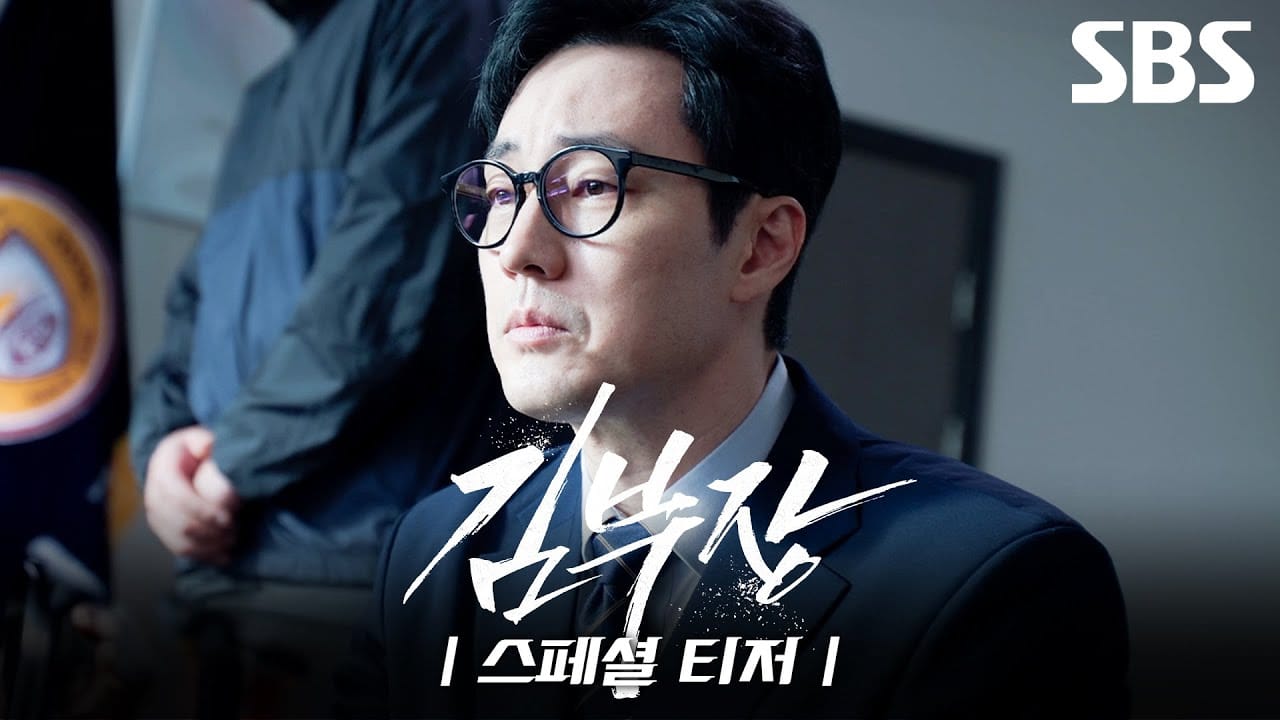
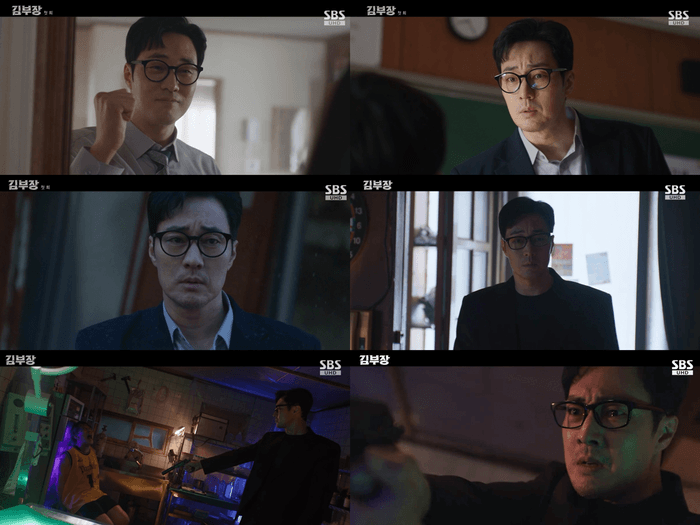
Mr. Kim stars So Ji-sub as Kim Sung-han, a mild-mannered bank department head — a “bujang” in Korean, which is essentially a mid-level managerial title, the kind of guy who approves your loan and forgets your name immediately after. He is unremarkable. He is forgettable. He is exactly the kind of man you would not look twice at on the subway.
He is also a former Olympic gold medalist in taekwondo and a retired government special agent of the highest clearance. He spent years burying all of that, building a deliberately boring life, because all he wanted was to raise his daughter in peace. The moment that peace is shattered, the bujang disappears. What’s left is something considerably more dangerous.
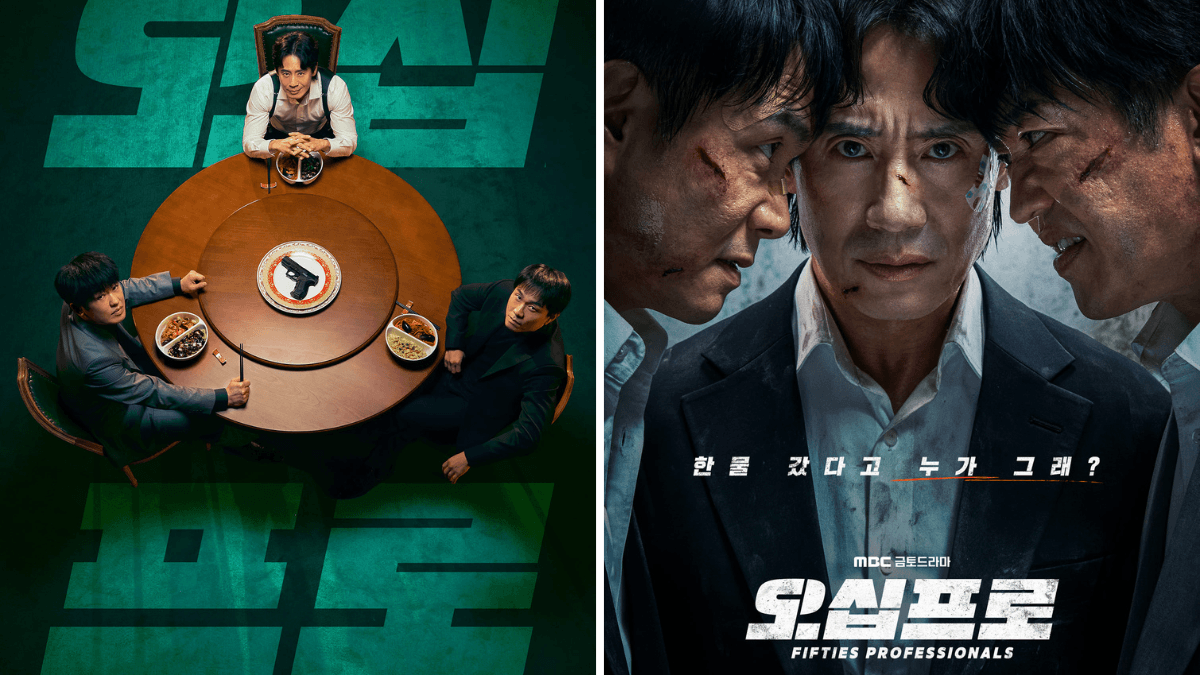
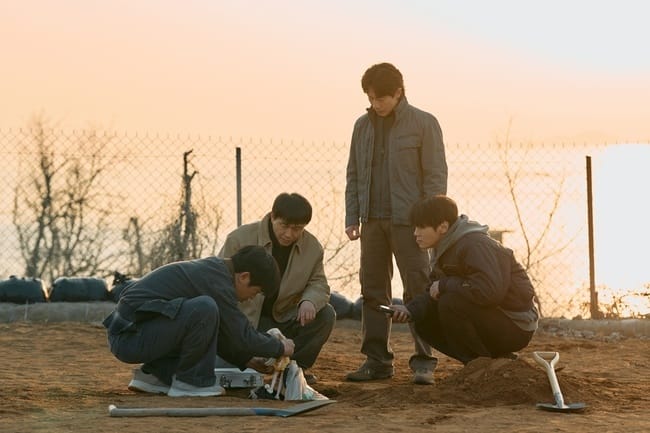
Fifties Professionals takes the same basic concept and triples it. Shin Ha-kyun plays a man who was once the top black-ops operative for South Korea’s National Intelligence Service — the kind of agent whose existence was classified, whose file was burned, who officially never happened. Oh Jung-se plays a North Korean special forces operative who crossed the border and has been lying low ever since. Heo Sung-tae plays a former number-two in one of Korea’s most feared crime organizations.
Now they are all fifty-something. Their bodies ache. Their glory days feel like someone else’s biography. Life has ground them down to fifty percent of what they once were — which, as the title wryly implies, is still more than enough.
These are very different shows in tone. Mr. Kim is sleek and controlled, a slow burn that erupts into surgical precision. Fifties Professionals leans into comedy, into the indignity of aging, into the painful humor of men who were once gods among men now struggling to get up off the floor after a fight. But they share a DNA. They are both asking the same question: what happens when the man you thought was nobody turns out to have been somebody, all along?
Why This Formula Keeps Working
I have spent thirty years in Korean screenwriting, and I want to be honest with you: this trope is not new. The hidden badass — the ordinary-seeming person with a devastating secret past — has been a storytelling device for as long as stories have existed. Westerns used it. Spy fiction is built on it. Liam Neeson made a second career out of it with Taken.
So why does it keep landing in K-drama? Why, specifically, in this form — the middle-aged father with a buried past?
The first reason is that fatherhood and action make an almost unfairly powerful emotional cocktail. When Kim Bujang reveals what he is capable of, it is not just exciting. It is moving. Because the reveal is not really about his skills — it is about what he was willing to sacrifice to protect his child. He gave up his identity. He gave up his past. He gave up the only version of himself that was genuinely extraordinary, and he did it willingly, without complaint, and without anyone ever knowing. The action sequences are spectacular, but they are really just the surface of something much more sentimental underneath.
Western audiences know this feeling. Taken works for the same reason. The brutality is almost beside the point — what we are watching is a father’s love made literal, given a body count.
The second reason is specifically Korean, and I think it is the most interesting one.
Korean society places enormous weight on visible markers of success. Status, titles, hierarchy — these things matter in ways that are sometimes difficult to explain to people from outside the culture. A “bujang” is a respectable enough title, but it is decidedly not the top of the mountain. It is the middle. The comfortable, unremarkable, anonymous middle. In a culture that prizes achievement so heavily, being ordinary carries its own quiet burden.
The fantasy these shows are selling — and it is absolutely a fantasy, let’s not pretend otherwise — is that ordinary is just a disguise. That the man who got passed over for promotion, who rides the same subway car every morning, who nobody looks at twice, might be carrying something extraordinary inside him that the world simply never asked to see. It is the fantasy of hidden depth. Of unrecognized greatness. Of a life that looks like nothing from the outside but contains everything.
For Korean men in their forties and fifties — the demographic these shows are aimed at, and who are watching in enormous numbers — that fantasy hits somewhere very specific. In a country where men of that generation were raised to sacrifice, to provide, to endure without complaint, there is something deeply appealing about the idea that all of that invisible labor, all of that suppression of self, has been worth something. That the quiet man in the tie was always the most dangerous person in the room.
The third reason is webtoons, and it matters more than people think.
Mr. Kim is adapted from a webtoon with an enormous existing fanbase. That fanbase already told the industry exactly what it wanted. The drama did not gamble on this concept — it followed a proven map. This is increasingly how Korean television works. The most successful shows of the last several years have been webtoon adaptations, precisely because the source material has already been stress-tested against millions of readers. By the time a concept reaches your screen, someone already knows it works.
Where the Two Shows Actually Differ
Now here is where I want to push back slightly on the easy comparison, because these shows are doing quite different things beneath their shared surface.
Kim Bujang has never diminished. His skills have not rusted. The man we see at the start of the show — quiet, controlled, invisible — is already at full capacity. He made a choice to step back from the world, but stepping back did not make him weaker. When the switch flips, it flips completely. There is no warming up period, no fumbling, no moment of doubt about whether his body still remembers what his mind knows. He is John Wick in a Korean bank, with a daughter instead of a dog.
The emotional engine of his story is restraint and revelation. The question is not whether he can do this. The question is how long he will wait before he does.
Fifties Professionals is doing something fundamentally different and, I would argue, more interesting. These three men are not at full capacity. They are at fifty percent, and the show knows it and leans into it. They grunt when they stand up. They get winded. They make mistakes that the younger versions of themselves never would have made. The comedy — and this show is genuinely funny — comes from the gap between what they were and what time has made of them.
The emotional engine here is reclamation. Can they get back to themselves? Not all the way, maybe. But enough. Enough to matter. Enough to still be dangerous when it counts.
This distinction matters for what the shows are actually saying about middle age. Mr. Kim says: you were always great, you just stopped showing it. Fifties Professionals says: you were great, life happened to you, and you can claw some of it back. One is a fantasy of latent power. The other is a fantasy of resilience. Both are comforting, but in different ways, and for different wounds.
What This Looks Like From the Writer’s Chair
From a structural standpoint, both shows are doing something smart that I think deserves more credit than it usually gets.
The classic dramatic problem with the “secret badass” setup is pacing. If you reveal the secret too early, you lose all your tension. If you hold it too long, audiences get frustrated. The skill is in the layering — in dropping just enough hints that the reveal feels earned rather than random, while keeping enough back that the surprise still lands.
Mr. Kim handles this by making So Ji-sub’s physical stillness do the work. There is a particular quality to how his character occupies space — too controlled, too precise, too calm for a man whose most dangerous encounter should be an aggressive mortgage applicant. Something is always slightly off about his ordinariness. Attentive viewers clock it. Less attentive viewers get a shock.
Fifties Professionals takes a different approach and puts the “secret” out in the open almost immediately. We know who these men were. The mystery is not their pasts — it is their presents. What are they doing now? Why are they together? What is being asked of them? The show inverts the formula and is better for it.
Both approaches work. But they work for different kinds of audiences, and understanding that difference tells you something about how Korean television has learned to play to a fractured viewing landscape, where some people are watching for plot and some are watching for feeling and the best shows find a way to serve both at once.
The Question Worth Sitting With
Here is what I keep coming back to, after watching both shows and thinking about why they hit as hard as they did:
Why do we want so badly to believe that the quiet man is secretly extraordinary?
I do not think this is just a Korean thing. I think it is a very human thing, surfacing in a distinctly Korean form. We are all, to some degree, hiding something. We are all, in some dimension, more than we appear. We have all made sacrifices that went unacknowledged, buried capacities that circumstances never required, become smaller than we once imagined we would be.
The K-drama dad who turns out to be a killing machine is not really about action. He is about dignity. He is about the possibility that the life you have lived, however unremarkable it looks from the outside, was always worth something. That you were always worth something.
And when his daughter is in danger and the bujang finally, finally lets himself be what he actually is — we are not just watching someone fight. We are watching someone be seen, fully, for the first time.
That is why we keep watching. That is why this formula is never going to get old.
We will see the next quiet man in the next drama, and we will already know what he is. And we will watch anyway, because knowing the secret in advance does not ruin it. If anything, it makes the reveal sweeter.
“That guy. Don’t tell me he’s…”
Yes. He is. He always was.
For a deeper cultural analysis of why this fantasy resonates so specifically with Korean men of this generation, see The Secret Agent Dad Fantasy: What K-Drama Is Really Saying About Korean Men.
Image Source:
Mr. Kim official stills: SBS official website (programs.sbs.co.kr/drama/mrkim)
Fifties Professionals official stills: MBC official website (program.imbc.com/FiftiesProfessionals)
Please credit “Image courtesy of SBS / MBC” when using
Data Source:
Nielsen Korea ratings data, 2026 Q1
Korea Creative Content Agency (KOCCA) webtoon adaptation index, 2025
#MrKim #FiftiesProfessionals #KimBujang #SoJiSub #ShinHakyun #KDrama #KoreanDrama #KDrama2026 #DramaAnalysis #KDramaReview #DadUniverse #ActionDrama #KoreanTV #KDramaFan #kdramawise