Few Korean phrases cause more quiet misunderstandings than 괜찮아 (gwaenchana). Textbooks give you one neat translation, “It’s okay,” and then you hear it in a drama and realize the person is clearly not okay at all.
The word is not tricky because it has many dictionary meanings. It is tricky because the meaning lives almost entirely in who says it, to whom, and in what tone. Here is how I read it, five ways, with the playwright’s habit of asking what a line is doing rather than what it says.
First, the Basic Meaning
괜찮다 (gwaenchanda) is the root: “to be fine, acceptable, not bad.” 괜찮아 is the casual form you use with friends, family, and people younger than you. 괜찮아요 is the polite form, and 괜찮습니다 is the formal one. The same sound is a statement with a falling tone (“I’m fine”) and a question with a rising tone (괜찮아? “Are you okay?”).
That last point matters more than any grammar chart. The only difference between “Are you okay?” and “I’m okay” is the melody of the sentence, which is exactly the part subtitles cannot carry.
Five Things 괜찮아 Can Mean
| Situation | Korean | What it really means |
|---|---|---|
| Checking on someone | 괜찮아? | Are you okay? Did you get hurt? |
| Comforting someone | 괜찮아, 괜찮아. | It’s all right. It’s over. I’m here. |
| Forgiving | 괜찮아, 신경 쓰지 마. | No harm done. Don’t worry about it. |
| Declining an offer | 괜찮아요. | No, thank you. I’m fine without it. |
| Hiding hurt | 나 괜찮아. | Please don’t ask me again. (I am not okay.) |
1. “Are You Okay?” and Its Mirror Image
When someone stumbles, drops a glass, or comes home late looking pale, 괜찮아? is the first thing out of a Korean mouth, often before any other word. The most natural reply is also 괜찮아, which makes the phrase a kind of verbal handshake: the question and the answer are the same word, and both are about reassurance rather than information.
2. The Comforting 괜찮아
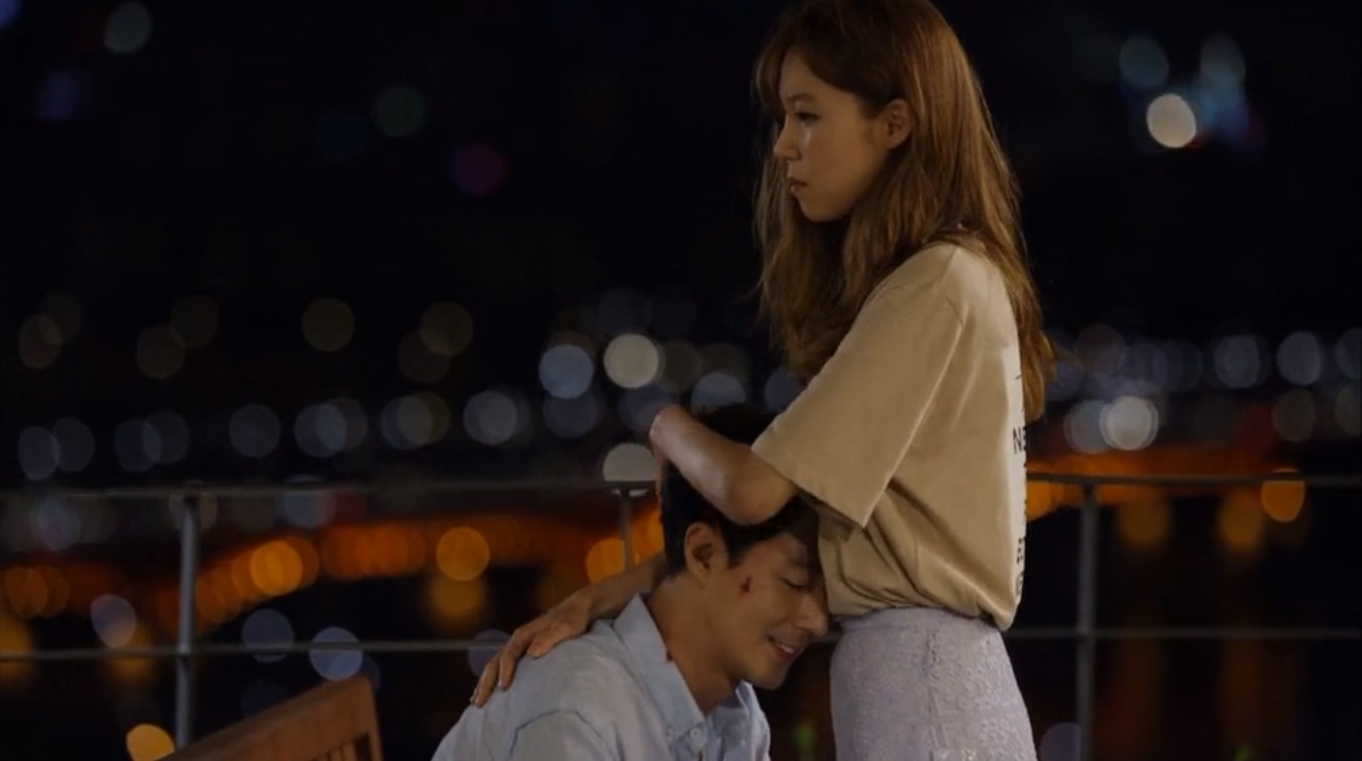
Said twice and softly, 괜찮아, 괜찮아 is what you say to a child who has fallen or a friend who is crying. It does not mean “nothing is wrong.” It means “this will pass, and you are not alone.” In translation it is often flattened to “It’s okay,” but the feeling is closer to a hand on the back.
It is no accident that the 2014 SBS drama It’s Okay, That’s Love carries the word in its Korean title, 괜찮아, 사랑이야, which reads literally as “It’s okay, it’s love.”
3. The Forgiving 괜찮아
If you apologize and hear 괜찮아, the speaker is lowering the stakes for you. Koreans often pair it with 신경 쓰지 마 (“don’t worry about it”). The point is to let the other person off the hook, which is why an apology and a 괜찮아 usually arrive together in a scene.
4. The Polite Refusal
This is the one that confuses learners most. When a shop assistant offers a bag, a host offers a second helping, or a friend offers to pay, 괜찮아요 or 괜찮습니다 can mean “No, thank you.” The same word that welcomed help in the first sense now turns it down. Context decides: if someone holds out something and you hear 괜찮아요, assume the answer is no.
5. The 괜찮아 That Means the Opposite
Here is where it gets dramatic. A character who says 나 괜찮아 (“I’m fine”) with a flat face, a pause, or a turned back is almost never fine. In Korean culture, not burdening other people is a form of care, and saying you are okay is a way of closing the door gently. When you watch a drama, listen for what happens just before and after the word: a long silence, a forced smile, someone looking away. Those signals tell you which 괜찮아 you are hearing.
A Playwright’s Note
On stage, a line that means its opposite is the most useful tool a writer has. 괜찮아 is a gift for dramatists because it lets a character say the safe thing aloud while the audience reads the true thing from the silence around it. When I write a scene, I often ask whether a character can hide behind one small, polite word. Korean offers dozens of them, and 괜찮아 is the most versatile.
The same flexibility is why one subtitle line, “I’m fine,” can hide four different scenes. If you remember only one thing, remember this: in Korean, a calm “I’m fine” is sometimes a sentence and sometimes a wall.
A Quick Way to Tell Them Apart
- Rising tone: a question. They are checking on you.
- Said twice, softly: comfort.
- Paired with 미안해 or 신경 쓰지 마: forgiveness.
- Said while declining something offered: a polite no.
- Flat, with a pause or a turned face: probably not okay at all.
Try It Yourself
Next time a character says 괜찮아 in a drama you are watching, pause and ask which of the five it is. Then check what the next shot shows. You will start hearing the whole sentence, not just the subtitle.
Which 괜찮아 has surprised you most? Tell me in the comments.
📌 Image Credits: The featured image is a scene from It’s Okay, That’s Love (SBS, 2014). All rights belong to SBS and the production company. It is used here solely for commentary and review purposes.
Related reading
- Korean Sentence Endings in K-Dramas: -네, -거든, and -잖아 Explained
- Learn Korean from Queen of Tears: The Sorry That Doesn’t Mean Sorry
- Learn Korean from My Demon: How to Propose (and Get Rejected in Public)

June Lee is my pen name. I'm a Korean playwright, which means I write for the stage, not for television. I made my debut through the Busan Ilbo Sinchunmunye (부산일보 신춘문예), the New Year literary competition Korean newspapers use to launch new writers. My plays have been published in the collection 천국으로 배달해 드립니다 and staged by the Busan Metropolitan Theatre Company. More than thirty years after my debut, my plays are still being performed.
Plays rarely pay the rent, so for most of my career I've also taught: writing courses at a university, and nonsul (논술), the argumentative essays Korean students write for university admissions. Years of building scripts and taking students' sentences apart left me with one habit I can't switch off. I read K-dramas the way I read a script, for the structure, the pacing, and the cultural details most reviews walk past.
More about me →