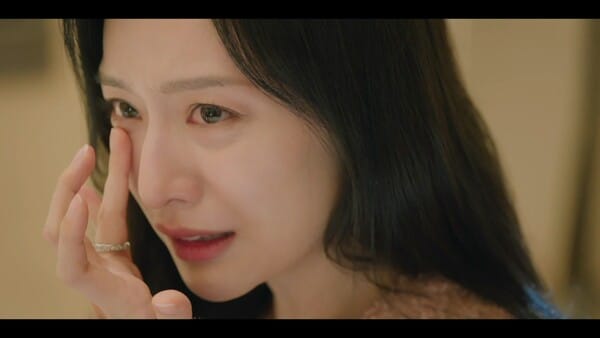
Hong Hae-in and Baek Hyun-woo say sorry to each other constantly across sixteen episodes. Almost none of it means what the subtitles say.
Korean has two common ways to apologize, and Queen of Tears uses the gap between them as a thermometer for the marriage. If you only ever watch this drama with subtitles, you are missing the instrument the writers were actually playing.
The Key Word: 미안해 (Mi-an-hae)
미안
= not at ease, uncomfortable
미 (未) — not yet
안 (安) — comfortable, at peace
미안해 is the casual, close form. You say it to someone you are on relaxed terms with — a spouse, a friend, a sibling. It sounds small and warm, almost like brushing something off.
미안합니다, by contrast, is the same root word dressed in formal clothing. It is what you say to a stranger, a boss, or someone you are keeping at arm’s length. It is correct. It is also cold.
Watch which version Hae-in and Hyun-woo use with each other. Early in the drama, when the marriage has already gone quiet, their apologies drift toward the formal end. It is not politeness. It is distance wearing the costume of politeness.
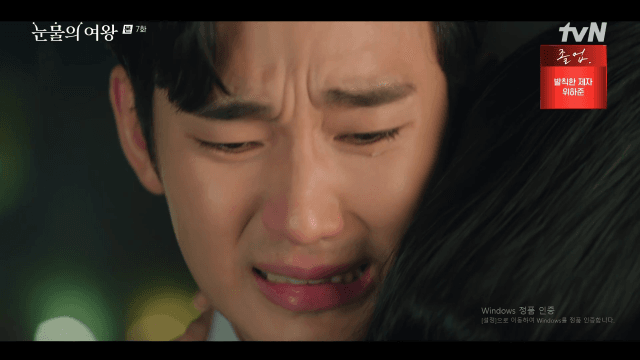
The Word That Means the Marriage Might Survive: 여보 (Yeo-bo)
여보
= a term married couples use for each other, roughly “honey” or “dear”
There is no strong hanja breakdown here — 여보 is a native Korean term, not a Sino-Korean compound, which is part of why it feels so intimate. It belongs only inside a marriage.
여보 barely appears in the early episodes of Queen of Tears. Hae-in and Hyun-woo call each other by title, by name, by nothing at all. When 여보 resurfaces later in the drama, it is not decoration. In Korean drama writing, a term of address that disappears and then comes back is never an accident. It is the writers telling you, without a single line of exposition, that something has been repaired.
Try saying it out loud: yeo-bo. Notice how different it feels in your mouth from a formal title like 사모님 (sa-mo-nim), the honorific used for a married woman of status inside the Queens family. One word marks rank. The other marks closeness. Queen of Tears never confuses the two, and neither should you when you’re picking words in Korean.
The Word for When It’s Actually Over: 이혼서류 (I-hon Seo-ryu)
이혼
= divorce
서류
= documents, paperwork
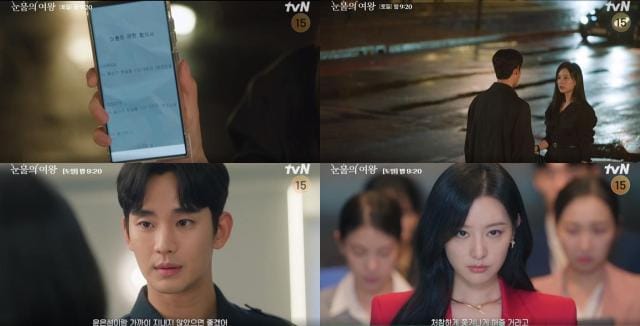
이혼서류 is about as unromantic as Korean gets, and that is exactly why the show uses it as a prop. A folder of 이혼서류 sitting on a table says more than a shouted argument would. In Korean storytelling, the paperwork itself becomes a character — something that can sit quietly in a room and change the temperature of a scene just by existing.
Words to Remember
Korean, Romanization, Meaning
미안해, mi-an-hae, sorry (casual, close)
미안합니다, mi-an-ham-ni-da, sorry (formal, distant)
여보, yeo-bo, honey / dear (married couples only)
사모님, sa-mo-nim, honorific for a married woman of status
이혼서류, i-hon seo-ryu, divorce papers
A Playwright’s Note
I have written arguments between married couples more times than I can count, and the hardest note to get right is never the angry line. It is the apology that follows it. An apology in the wrong register tells the audience the character is still protecting themselves. An apology in the right register tells the audience they have finally put the armor down.
Park Ji-eun understands this better than most writers working today. She lets Hae-in and Hyun-woo apologize to each other constantly, and she never once makes it feel repetitive, because she keeps changing which version of sorry they are allowed to use.
If you want the fuller case for why this particular chaebol drama earned its reputation, I wrote about that here: Why Queen of Tears Became a Successful Chaebol Cliché. And if the honorific system in this post left you curious about how deep it goes in everyday Korean speech, that is worth its own lesson entirely.
The next time you rewatch this drama, mute your instinct to read the subtitles first. Listen for 미안해 versus 미안합니다. You will hear the marriage falling apart and coming back together before the plot ever tells you.
Image Source: tvN, Studio Dragon official press materials
Data Source: Queen of Tears, tvN, 2024. Written by Park Ji-eun. Korean honorific and address term background referenced from the National Institute of Korean Language.
#QueenOfTears #LearnKorean #KDrama #KoreanLanguage #KoreanCulture #눈물의왕관 #KDramaExplained