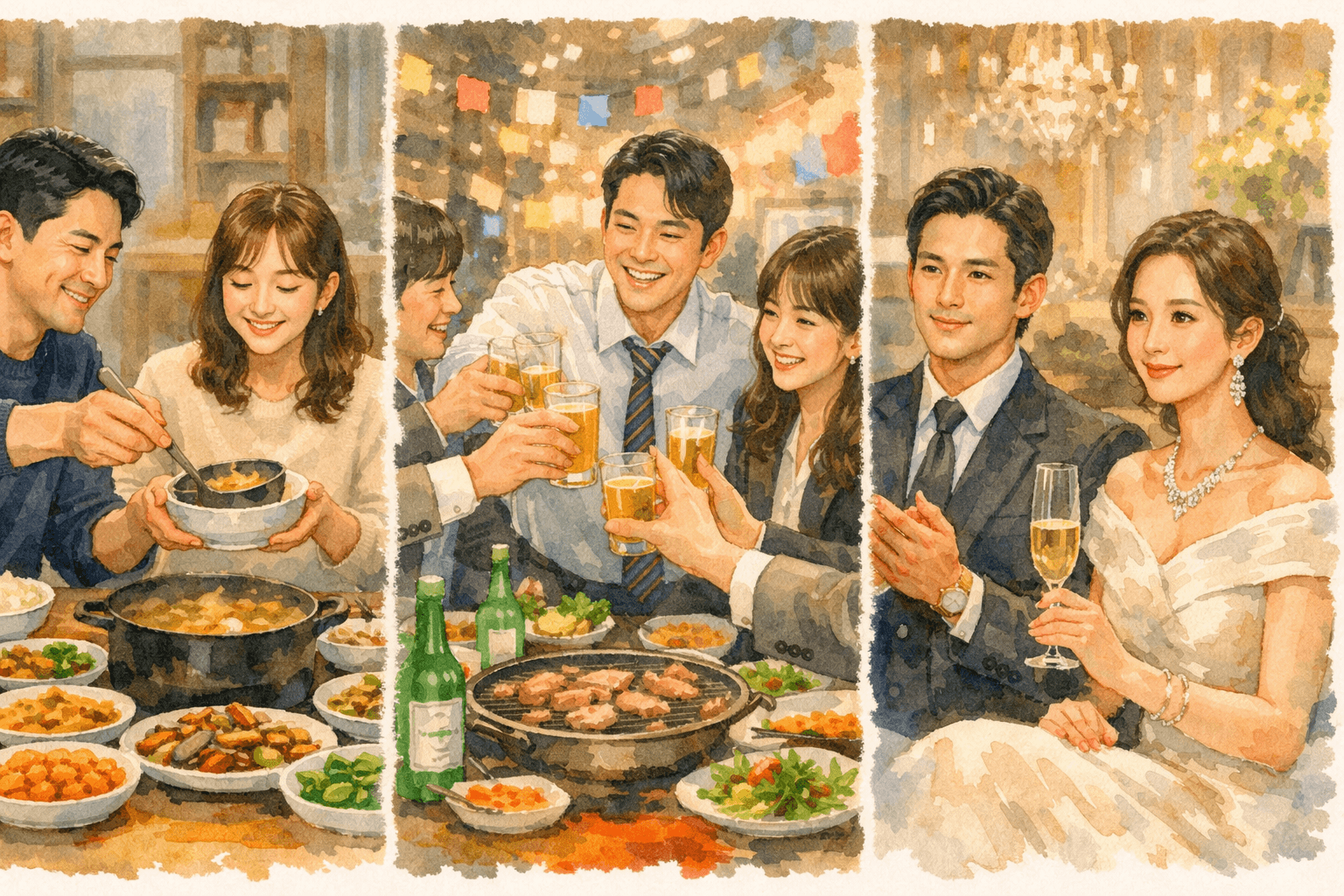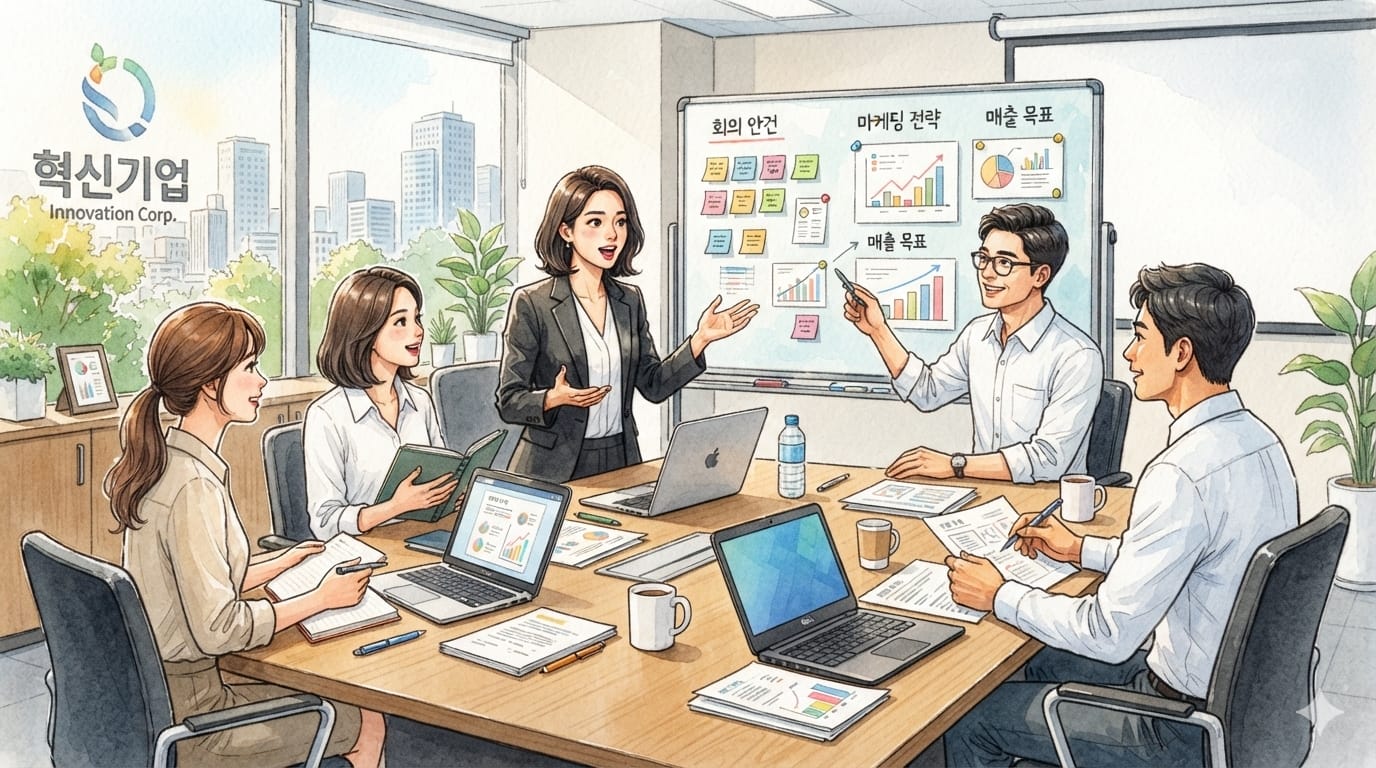
English viewers track a K-drama through names and pronouns. Korean dialogue is tracking something else entirely underneath it. The word a character uses to call another person carries age, rank, workplace status, and emotional distance all at once, and the moment that word changes, the relationship has already changed with it, usually before either character says anything about feelings out loud. Subtitles translate the sentence. They rarely translate the shift.
The office title that will not budge

What’s Wrong with Secretary Kim spends most of its run on a single piece of vocabulary. Secretary Kim calls her boss Vice Chairman (부회장님, bu-hoe-jang-nim) for nine years, through admiration and eventually love, without once softening it. The title is not politeness filler. It is a wall she rebuilds every time she speaks to him, because dropping it would mean admitting the relationship is no longer just professional. When she finally says his given name instead of his title, viewers who speak no Korean can still feel something break open, because the sentence itself changes shape. That is the love story, compressed into one swapped word.
The honorific that marks a border
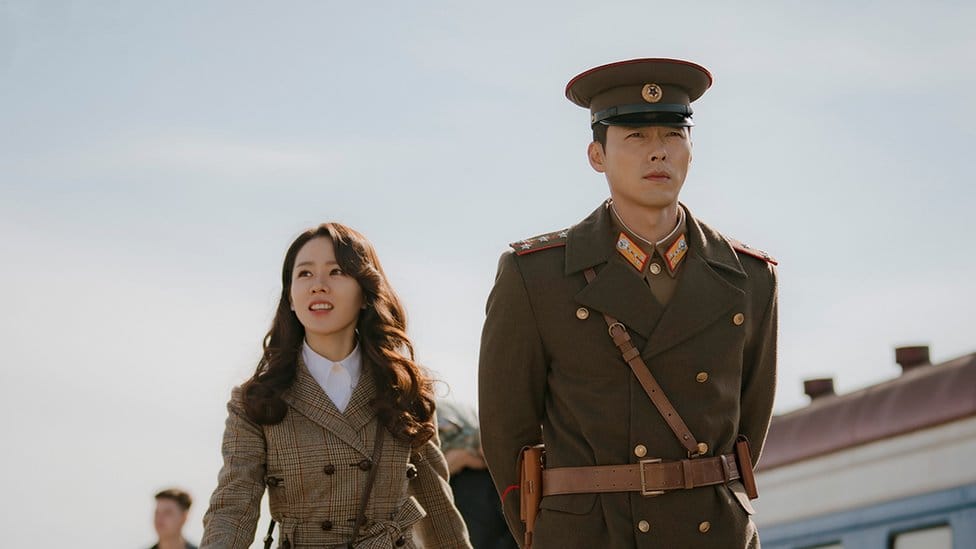
Crash Landing on You runs on a similar mechanic. Yoon Se-ri keeps an honorific suffix on Ri Jeong-hyeok’s name for a long stretch of the show, the equivalent of always saying Mister Ri Jeong-hyeok even after surviving a small war together. It works like a fence around the relationship, polite no matter how much danger they have shared. Watching for exactly when that suffix disappears tells you more about where the two of them stand than any line of dialogue does, because the address is doing the work a Western script would hand to a kiss or a confession.
The word that means both brother and boyfriend
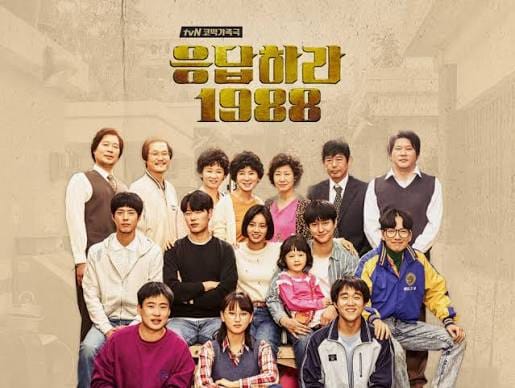
Then there is oppa, which trips up almost every new viewer at least once. A woman calling her boyfriend oppa literally means older brother, and it lands strangely in English until you realize it is not a statement about family. It is a slot in a system built on age and closeness, reserved for an older man she trusts enough to drop formality with. Reply 1988 uses this well, since the neighborhood friend group already calls each other by sibling terms, so when one of those friendships turns romantic, the show does not need a new word. It just needs the same word to suddenly mean more, and every Korean viewer feels the floor shift.
A quick map of how Koreans address each other
Korean dialogue often avoids a plain “you” altogether, so people reach for a ladder of options instead. Near the top is a title plus 님 (nim), such as Vice Chairman or Manager Kim, which keeps the focus on rank and respect. Below it is a name plus 씨 (ssi), a neutral polite form that works for peers or people slightly junior but sounds cold toward a boss. Closer still is the bare name, or a name plus 아/야, used with friends, younger people, and family. Kinship words like oppa, hyung, noona, and eonni sit on a separate track: they mark age and closeness, even between people who are not related. Dramas move characters up and down this ladder on purpose.
Why “you” can start a fight
In daily speech, Koreans often skip “you” and use a name, a title, or a relationship word instead. The blunt word for “you” (너, neo) aimed at someone older or higher in rank is a rudeness signal, and drama writers know it. When a character who has always used a title suddenly drops it for “you,” the subtitle may look neutral, but the scene has just turned cold.
What to actually listen for
None of this requires learning Korean to catch. It requires watching address the way you would watch a character’s posture or eye contact, as a second channel of information running parallel to the subtitles. When two characters change what they call each other, something has already been decided between them that the dialogue has not caught up to yet. That gap between the word and the confession is where a lot of the genre’s most quietly devastating writing actually lives.
Three shifts to watch for
- Title to name: the wall between the professional and the personal comes down.
- Name plus 씨 to the bare name: formality drops. When a fight sends a character back to the title, that is withdrawal, not politeness.
- A sibling term appears: someone is claiming closeness. When it disappears, so does the safety.
When the subtitles keep saying “Director” or “Manager Kim” where English would use a first name, the show is deliberately holding distance. We follow the same mechanic in Learn Korean from Agent Kim Reactivated: When the Honorifics Disappear, Trust It and Learn Korean from The Remarried Empress: The Word That Turns a Divorce into a Declaration of War.
Image Source: Netflix and tvN official stills
Data Source: Author’s own drama analysis
#KoreanCulture #KDrama #LearnKorean #WhatsWrongWithSecretaryKim #CrashLandingOnYou #Reply1988 #KoreanHonorifics #Oppa
Related reading
- Learn Korean from Agent Kim Reactivated: When the Honorifics Disappear, Trust It
- Learn Korean from The Remarried Empress: The Word That Turns a Divorce into a Declaration of War
- Why Does “Good Manager” Kim Act Like That? The K-Office Habits That Confuse Foreign Viewers

June Lee is my pen name. I'm a Korean playwright, which means I write for the stage, not for television. I made my debut through the Busan Ilbo Sinchunmunye (부산일보 신춘문예), the New Year literary competition Korean newspapers use to launch new writers. My plays have been published in the collection 천국으로 배달해 드립니다 and staged by the Busan Metropolitan Theatre Company. More than thirty years after my debut, my plays are still being performed.
Plays rarely pay the rent, so for most of my career I've also taught: writing courses at a university, and nonsul (논술), the argumentative essays Korean students write for university admissions. Years of building scripts and taking students' sentences apart left me with one habit I can't switch off. I read K-dramas the way I read a script, for the structure, the pacing, and the cultural details most reviews walk past.
More about me →