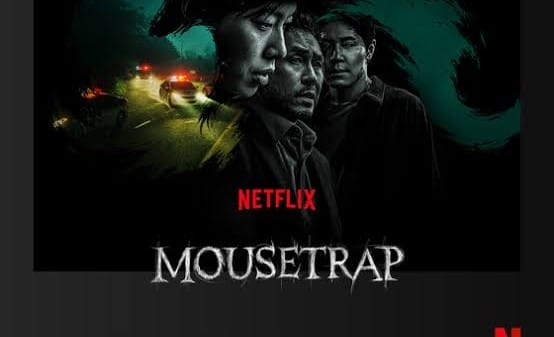
First, the title check. The Korean drama that shot to the top of Netflix’s global chart under the name 들쥐 (Deuljwi) carries an English title that isn’t a direct translation. Deuljwi literally means field mouse, or vole, a small rodent that has nothing to do with the household device the word “mousetrap” calls to mind. Netflix’s international title swaps the animal from the folktale for the trap that animal used to set, and that swap tells you what kind of show this is before the first episode even starts. It isn’t really a story about a rat. It’s a story about a man who gets caught.
The premise borrows a story most Korean children grow up hearing as a warning, not entertainment. Cut your fingernails and leave the clippings lying around instead of throwing them away, parents used to say, and a rat will eat them, take your exact shape, walk into your house, and answer to your name so convincingly that not even your own family can tell the difference. It’s a tidy piece of folk hygiene enforcement with a genuinely unsettling engine sitting inside it. Identity, in this story, was never protected by a soul or a face. It was protected by scraps of your own body that you were careless enough to leave lying around.
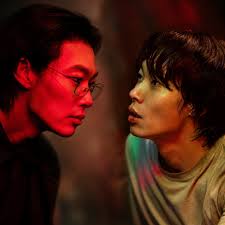
Mousetrap takes that engine and drags it into 2026. Ryu Jun-yeol plays Je Mun-jae, a reclusive novelist with severe anxiety who wakes up locked out of his own life. His phone’s fingerprint lock stops recognizing him, his accounts move without him, and a figure calling itself the Rat has already taken his name, his money, and the version of him that the world now accepts as real. Mun-jae partners, out of necessity rather than trust, with No-ja, a loan shark turned private investigator played by Sul Kyung-gu, who had been hunting him over an unrelated debt before the case turned into something stranger. Detective Park Sun-yong, played by Lee Kyu-hyung, works the same disappearance from the official side, always one step behind both of them. Directed by Kim Hong-sun and based on the Kakao webtoon Field Mouse by Ludovico, the ten-episode series dropped on Netflix on August 28, 2026, and climbed straight to the top of the platform’s global non-English chart within days.
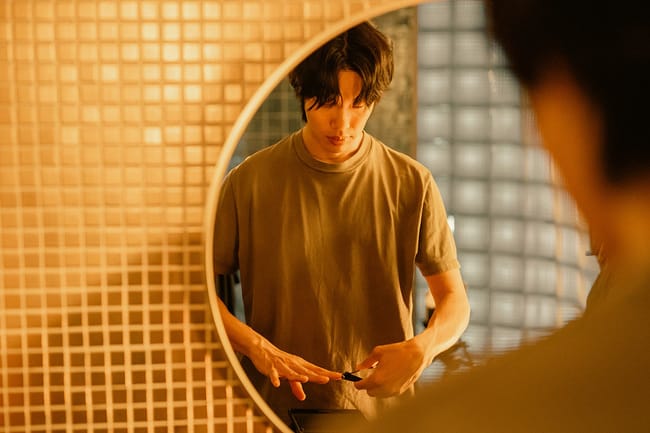
The nail-eating rat has never really left Korean pop culture. It shows up in children’s picture books, in variety show sketches used as a jump scare, and in casual slang, where calling someone “the rat that ate your nails” is shorthand for a copy so convincing it’s unsettling. What Mousetrap does that most retellings don’t is take the joke seriously enough to ask a harder question underneath it: if the folktale’s warning ever came true, who would the world actually believe, the person with the memories or the person with the paperwork? Framed that way, the show sits closer to identity-theft thrillers built around doppelgangers and stolen records than to a monster story, which is exactly why a loan shark who reads financial paper trails for a living turns out to be a better partner for Mun-jae than any amount of intuition would be.
What makes the premise land as more than a stunt is what it does to the idea of proof. A fingernail clipping was already the cheapest kind of evidence, dead skin nobody bothers to guard. Mousetrap just updates the object: a fingerprint on a lock screen, a face scan on a banking app, a signature on a contract nobody rereads. The show’s real subject is that a person is actually built out of two separate things we usually treat as one and the same. There is the outer self, the name and face and bank balance and contact list that the world agrees belongs to a specific person, and there is the inner self, the private, wordless certainty of being you, which no institution has ever figured out how to accept as evidence. Mousetrap keeps only one of those alive at a time. The moment a system stamps your outer self onto somebody else, your inner self stops counting as testimony and starts counting as delusion. Mun-jae doesn’t lose an argument with the Rat. He loses standing.
It matters, and doesn’t feel accidental, that the man this happens to writes fiction for a living. A novelist’s entire job is manufacturing people who aren’t real and getting readers to accept them as though they were, handing a name, a history, and a voice to somebody who exists nowhere outside the page. Mousetrap hands that exact skill back to its main character as a threat instead of a craft. Without spoiling the season’s later turns in detail, the story pushes the idea one uncomfortable step further: the man the audience has been trusting as the original starts to look less like a straightforward victim and more like someone who built his own name the same way the Rat is now trying to, borrowing material that was never entirely his to begin with. That’s the sharper version of the show’s question. It isn’t only what happens if someone steals your identity. It’s what happens if the identity being stolen was never fully self-made in the first place. The rat from the folktale isn’t hiding under the floorboards here. It’s sitting at the same desk, writing under the same name.
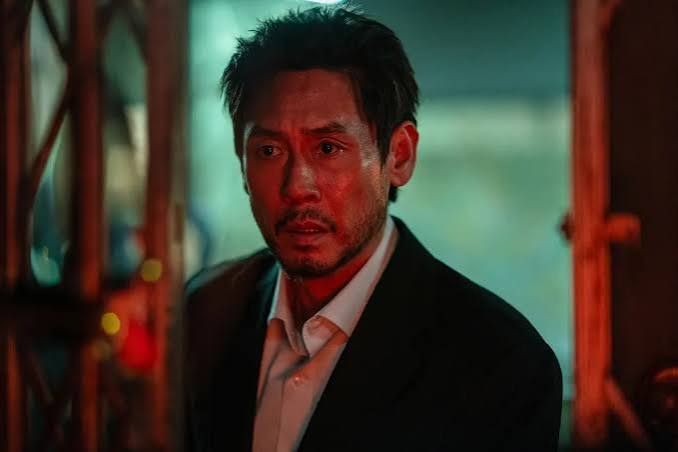
A note for fellow writers: the trick worth stealing isn’t the twin-lead casting, satisfying as it is to watch Ryu Jun-yeol play both sides of the same face. It’s how the show modernizes a folk premise without ever having to stop and explain the folklore out loud to an audience that no longer clips its nails over a trash can out of superstition. Old proof object: a fingernail. New proof object: a fingerprint, a face scan, a bank login. Old antagonist: an animal with an appetite. New antagonist: the very institutions that were supposed to protect identity, now running on evidence that anyone determined enough can copy. If you’re adapting a folk premise for a contemporary thriller, the folklore itself rarely needs updating. What needs updating is the object the story treats as proof. Swap that one element for its present-day equivalent and the rest of the old fear translates itself.
What worked, what didn’t. Critics have generally agreed the show looks and moves like a prestige production, and Sul Kyung-gu’s world-weary investigator gives the story a grounded second gear whenever the identity puzzle threatens to spin off into abstraction. Where the reviews split is pacing. More than one critic has called the season slick but sluggish, a thriller that sets up a genuinely disturbing premise in its first hour and then takes its time cashing it in, especially through the middle stretch where procedural legwork crowds out the psychological unease that made the opening so effective. If you go in expecting a tightly wound cat-and-mouse chase from episode one, budget for a slower middle section than the premise promises.

Mousetrap never really needed a monster. Its scariest idea is administrative: the system deciding who you are was built to trust records over memory, and once somebody else’s paperwork is stronger than your own testimony, being correct stops functioning as a defense. The question worth sitting with after the finale isn’t who the Rat turned out to be. It’s what, exactly, is currently doing the job of proving you’re you in your own wallet or your own phone’s login history, and how much of that a patient, well-prepared stranger could quietly take over instead.
Image Source: Netflix’s official Mousetrap (들쥐) poster and stills, used here for commentary and review purposes.
Data Source: Netflix official press materials for Mousetrap; Wikipedia and Namuwiki entries for 들쥐 (Deuljwi); MyDramaList; South China Morning Post review coverage.
#Mousetrap #Deuljwi #RyuJunYeol #SulKyungGu #LeeKyuHyung #KoreanDrama #NetflixKDrama #KdramaAnalysis #IdentityTheft