Let me start with a confession.
When the promotional material for Queen of Tears first started circulating, I rolled my eyes. Not because I doubted the talent involved, but because I had seen the ingredients before. Chaebol family. Star-crossed couple divided by class. Terminal illness. A marriage in trouble. Each of those elements had fueled dozens of Korean dramas before this one, and plenty of those dramas had ended in disappointment. The setup looked like a compilation of every tired formula the genre had ever produced, assembled into a single sixteen-episode package.
Then the ratings came in. Then I sat down and actually watched it.
By episode four, I understood what had happened. Queen of Tears had done something that sounds simple but is genuinely difficult to pull off: it had taken every cliché it borrowed and done real work on each one. Not subverting them in a self-conscious, look-how-clever-we-are way. Just making them function as though someone actually cared whether they were true.
I have spent thirty years writing scripts and watching other people’s scripts succeed and fail. What I want to do here is explain, from a writer’s perspective, exactly why this drama worked when so many others with similar premises have not.
What a Chaebol Drama Actually Is
For readers who are newer to Korean drama, a brief orientation is useful.
Chaebol is the Korean word for the large family-controlled conglomerate corporations that dominate South Korea’s economy. Samsung, Hyundai, LG — these are chaebol. The families that run them occupy a specific and peculiar position in Korean society: they are simultaneously admired, resented, envied, and regarded with deep suspicion. They exist at a remove from ordinary Korean life that is difficult to overstate, and yet they are everywhere in the culture — in the news, in political scandals, and, for decades now, in enormous quantities of popular fiction.
The chaebol romance drama is a genre unto itself. The formula, reduced to its essentials: an ordinary woman (usually working-class, usually clumsy, usually warm-hearted) crosses paths with an extraordinarily wealthy man who is initially arrogant, emotionally unavailable, and surrounded by people who want to keep them apart. Over the course of many episodes, barriers fall, love wins, and the wealth gap is dissolved by the greater power of sincerity.
This formula has produced some genuinely beloved dramas. Boys Over Flowers. My Love from the Star. The Heirs. It has also, over time, produced a surplus of interchangeable product that has left audiences increasingly tired of the whole enterprise. By the early 2020s, saying you were making a chaebol romance drama carried a burden of expectation that was almost impossible to meet. The genre had accumulated so much debt to its own clichés that every new entry started behind.
Queen of Tears began behind too. And then it found a way through.
The First and Most Important Decision: Reverse the Poles
The structural innovation at the center of Queen of Tears is one that sounds obvious once you hear it but apparently required considerable courage to actually commit to: the chaebol is the woman.
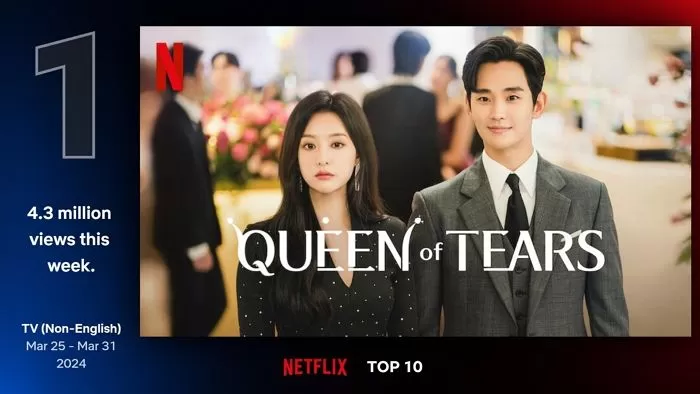
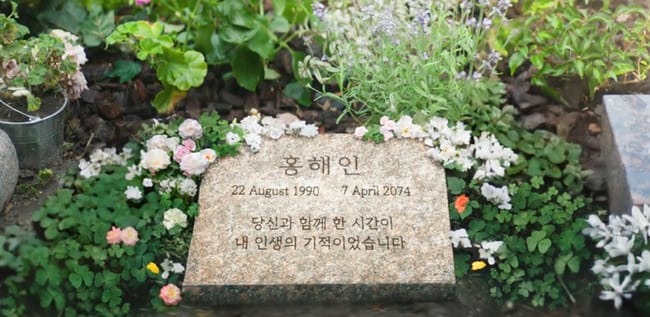
Hong Hae-in, played by Kim Ji-won, is the third-generation heir to Queens Group, a fictional conglomerate of the kind that employs tens of thousands of people and sponsors the kind of cultural institutions that put your name on buildings. She is educated, accomplished, accustomed to deference, and possessed of the particular social confidence that comes from never having had to worry about money. She is, in the vocabulary of the genre, the chaebol.
Baek Hyun-woo, played by Kim Soo-hyun, is from Yongduri, a small town. He became a Queens Group legal director on his own merits, and he met Hae-in through the kind of circumstance that only happens in dramas. He is warm, emotionally intelligent in ways that do not announce themselves, and from a family that is, in every material sense, the opposite of the one he married into.
This reversal matters more than it might initially appear. The traditional chaebol drama positions wealth as something that needs to be earned — by the woman, through love. The man’s money is the prize, and the story is about deserving it. Queen of Tears removes this dynamic entirely. Hyun-woo has not married into money because the money was the point. The money is, in many ways, the problem. What he married was a person, and that person, under the accumulated pressure of family expectation and corporate identity and the quiet attrition of marriage, has become someone increasingly difficult to reach.
That shift in architecture changes everything that follows. It means the story is not about class aspiration. It is about something far more universal: two people who loved each other and then slowly, without noticing it happening, stopped being able to find each other.
Starting in the Middle of Something
Most romantic dramas begin at the beginning. Two people meet. Circumstances keep them apart. They fall in love anyway.
Queen of Tears begins in the middle of something that already happened.
The marriage of Hong Hae-in and Baek Hyun-woo is three years old when the drama opens, and it is in the specific kind of trouble that does not announce itself dramatically. Nobody screamed. Nobody betrayed anyone. What happened was quieter and, in many ways, harder to fix: they drifted. The honeymoon ended and the reality of who they each were, day to day, in the undramatic hours of an ordinary life together, turned out to be something neither of them had fully anticipated. Hyun-woo has been preparing divorce papers. Hae-in has been letting him.
This premise asks the audience to do something that most romantic dramas do not require: to care retroactively. To invest in a relationship you did not watch form, to believe in a love you are only being told about, and to feel the weight of its deterioration before you have seen any of its warmth. It is a harder ask. And it works precisely because the drama is specific about the texture of what went wrong.
The complaints are recognizable. The silences are recognizable. The way people who once knew how to talk to each other find that the fluency has gone — that is recognizable to anyone who has been in a long relationship. What the drama understood is that the audience for this kind of recognition is not just the twenty-two-year-olds watching for fantasy. It is the thirty-eight-year-olds watching because something in the setup hits close to home.
The Illness as a Clock, Not a Shortcut
Terminal illness in drama is a well-worn device, and it is easy to use badly. The bad version inserts it as a source of guaranteed tears, a structural cheat that forces emotion the story has not actually earned. The audience cries not because of what they have been shown but because death is sad and the music swells at the right moment.
Queen of Tears uses Hae-in’s diagnosis differently. The illness does not create the emotion — it creates the urgency. It functions as a clock. And what the clock is counting down to is not death exactly, but the question of whether, in the time remaining, these two people can get back to something they lost.
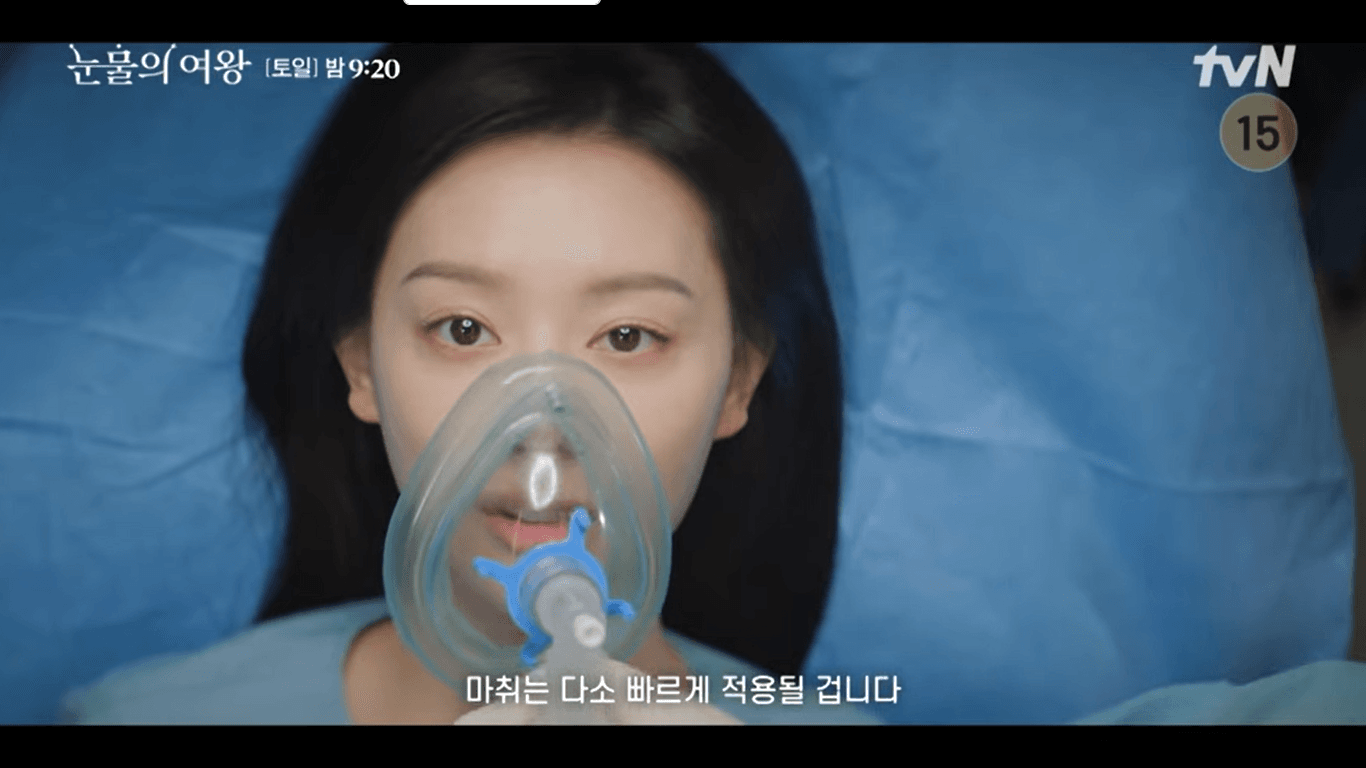
That reframe changes the stakes entirely. The drama is not asking you to feel sad because someone is dying. It is asking you to feel something more complicated — the particular grief of watching people run out of time for things they kept meaning to get to, for conversations they kept postponing, for the version of their relationship that still existed somewhere underneath the accumulated weight of years.
This is the kind of emotional territory that separates a drama from a weeper. One makes you cry in the moment. The other stays with you after the credits.
What They Did with the Family
Here is where many chaebol dramas reveal the limits of their imagination: the chaebol family is a collection of obstacles. The cold mother-in-law. The scheming uncle. The older sibling protecting family interests. These characters exist to create conflict and then, occasionally, to reform enough to bless the union.
The Queens family in this drama starts exactly there. The mother is formidable and unreadable. The father is the kind of patriarch whose emotional life has been so thoroughly subordinated to institutional identity that you wonder if he still has one. The older brother is protective in the specific way of someone who has decided that Hyun-woo is beneath them and is not particularly interested in reconsidering.
Then the drama does something with these people that the genre almost never does: it takes them seriously.
Their transformations are not quick. They are not tidy. They do not happen because love conquers all in a single scene. They happen because circumstances force each of them to confront something true about themselves, and each of them, when the moment comes, chooses not to look away. The father’s arc is particularly moving, in the way that stories about people who have spent their lives performing competence and then face something competence cannot help with tend to be moving.
By the end, the Queens family is not redeemed in the fairy tale sense. They are changed in the messier, more believable sense of people who have been through something difficult and come out different. That is genuinely unusual for this genre, and it elevates the entire drama around it.
The Architecture of the Tone
One of the things that made Queen of Tears accessible to such a wide range of viewers was the care taken with pacing the emotional register.
The first several episodes are genuinely funny. The contrast between Hyun-woo’s rural hometown — generous, chaotic, entirely unintimidated by wealth — and the world of Queens Group creates comic opportunities the drama exploits consistently and well. There is real playfulness in the early episodes, a lightness that makes the story feel approachable. You are not being asked to sit with grief immediately. You are being invited in.
As the drama progresses, the register shifts. The comedy does not disappear, but it becomes less central. The emotional weight increases gradually, in a way that feels like the natural movement of a story rather than a gear change. By the time the drama reaches its most difficult passages, the audience has been with these characters long enough that the difficulty lands properly.
This is not easy to do. Tonal consistency is one of the hardest things to maintain in long-form television. The fact that Queen of Tears managed it across sixteen episodes, with multiple writers and directors involved in the production, is an achievement worth noting.
Kim Soo-hyun and Kim Ji-won
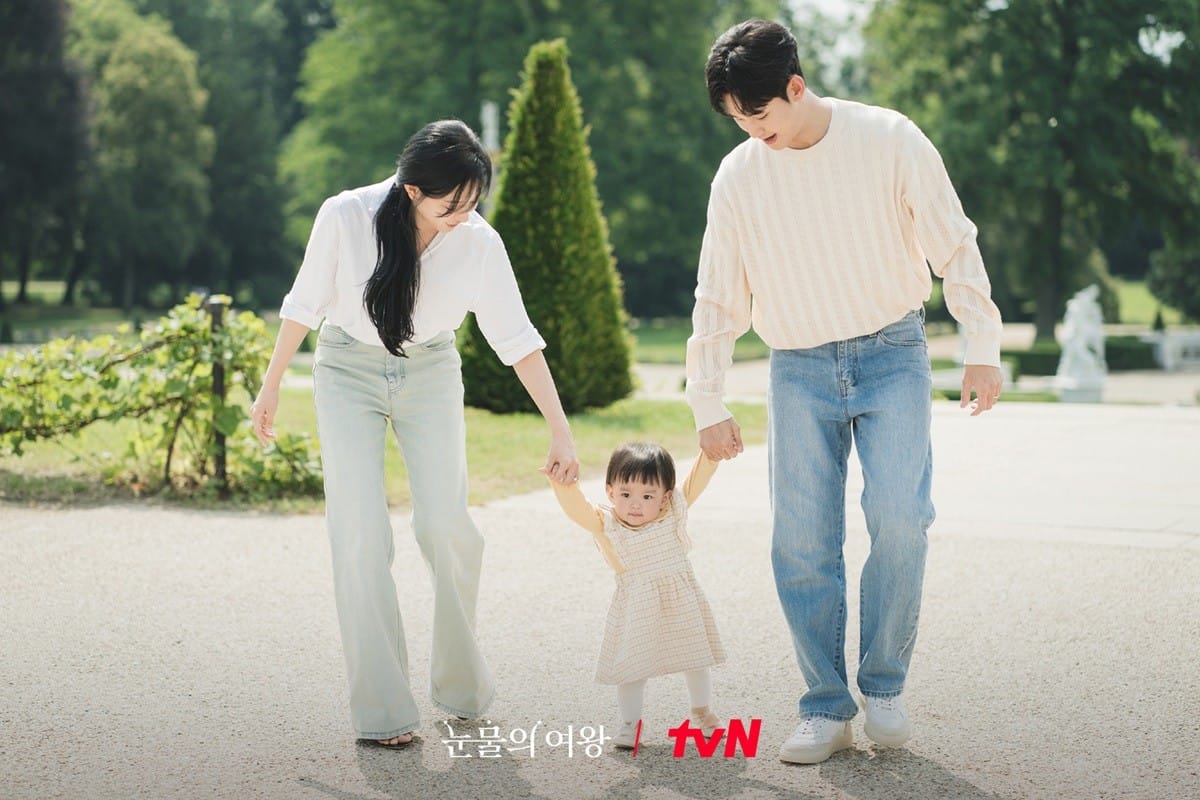
I have watched a lot of Korean drama over thirty years, and I want to be direct about this: the chemistry between these two actors is exceptional in a way that goes beyond the usual compliment.
Kim Ji-won does something technically difficult with Hong Hae-in. She plays a character who has, over the course of her life, learned to keep nearly everything inside — warmth, vulnerability, need — and has become so practiced at this that she sometimes forgets those things are in there. The challenge is making an audience love a character who has systematically hidden the parts of herself that are easiest to love. Kim Ji-won does this through the accumulation of small things: a look held a fraction of a second too long, a hesitation before a response, a moment of softness that appears and disappears so quickly you might wonder if you imagined it. The character works because the actress is always doing more than the script requires.
Kim Soo-hyun plays someone facing the opposite problem: he feels everything, and has learned that showing it will not be received well. His performance is notable for its restraint. The anger is there. The love is there. The grief is there. He just never lets them out fully. Watching the moments when they almost break the surface and then don’t is where a lot of the drama’s tension lives.
Together, they create something that takes several episodes to recognize and then, once you recognize it, you cannot stop noticing. The ease of people who have known each other for years, the specific sadness of that ease having gone cold, and then the cautious, uncertain warmth of something starting to come back. That progression is the drama. They carry it.
What This Means for the Genre
Queen of Tears is not evidence that the chaebol romance is back. What it is evidence of is simpler: that any material, handled with enough care, can be made to work.
The genre’s problem has never been the subject matter. Wealth and class and romantic love and family loyalty are not tired subjects. They are among the oldest subjects in storytelling, and they will still be working long after current trends have shifted. What gets tired is the automatic, unexamined application of the same solutions to those subjects. The default that stops anyone asking whether there is a better way.
Park Ji-eun asked. And then she found one.
The lesson of Queen of Tears, if there is one, is not that you need to reverse the gender roles or start in the middle of a marriage or give the chaebol family an actual arc. Those specific solutions belong to this specific drama. The lesson is the habit of mind behind them: the refusal to accept the formula as inevitable, the willingness to ask what the material actually contains and then go after that, rather than going after what worked before.
That is what good writing looks like, in any genre, in any language. Queen of Tears just happened to do it in front of a very large audience.
Image Source
All Queen of Tears promotional images and production stills are the property of tvN and Studio Dragon. All images used in this post are AI-generated originals created for illustration purposes only and are not intended to represent official promotional material.
Data Source
Queen of Tears, tvN, 2024. Written by Park Ji-eun. Directed by Jang Young-woo and Kim Hee-won.
Viewership ratings sourced from Nielsen Korea and TNMS national ratings data, 2024.
Background on chaebol structure referenced from The Korea Herald and Korea JoongAng Daily.
Queen of Tears leans heavily on the chaebol formula — if you’ve ever wondered why K-drama keeps returning to that premise, I’ve written about it: Why Does Every K-Drama Have a Chaebol Lead?
#QueenOfTears #눈물의여왕 #KDrama #KimSoohyun #KimJiwon #tvN #KoreanDrama #ChaеbolRomance #KDramaReview #ParkJieun #KDrama2024 #KoreanDramaAnalysis #MustWatchKDrama #KDramaRecommendation #ScreenwritingKDrama #KDramaExplained #WatchKDrama #KoreanRomance #KDramaEnglish #StudioDragon