1. “What, is this going to be that kind of ending?” — My heart rate right before a K-drama finale
If you’ve been watching K-dramas long enough, you probably know the feeling.
You’re in the last episode of a fantasy drama, and your hand tightens a little around the remote.
Western viewers might find this unfamiliar. With American shows, seasons give you a safety net — if a finale disappoints, there’s always next season. Korean dramas don’t work that way. Whether it’s 12 episodes or 16, that’s the whole story. There’s no next season to fix a bad ending.
Fantasy dramas carry the highest risk. From episode one, the show builds a set of rules about how its world works. The more complex those rules get, the harder it becomes to pay them all off. And in the final episode, when everything has to land at once — I’ve watched too many of these unravel.
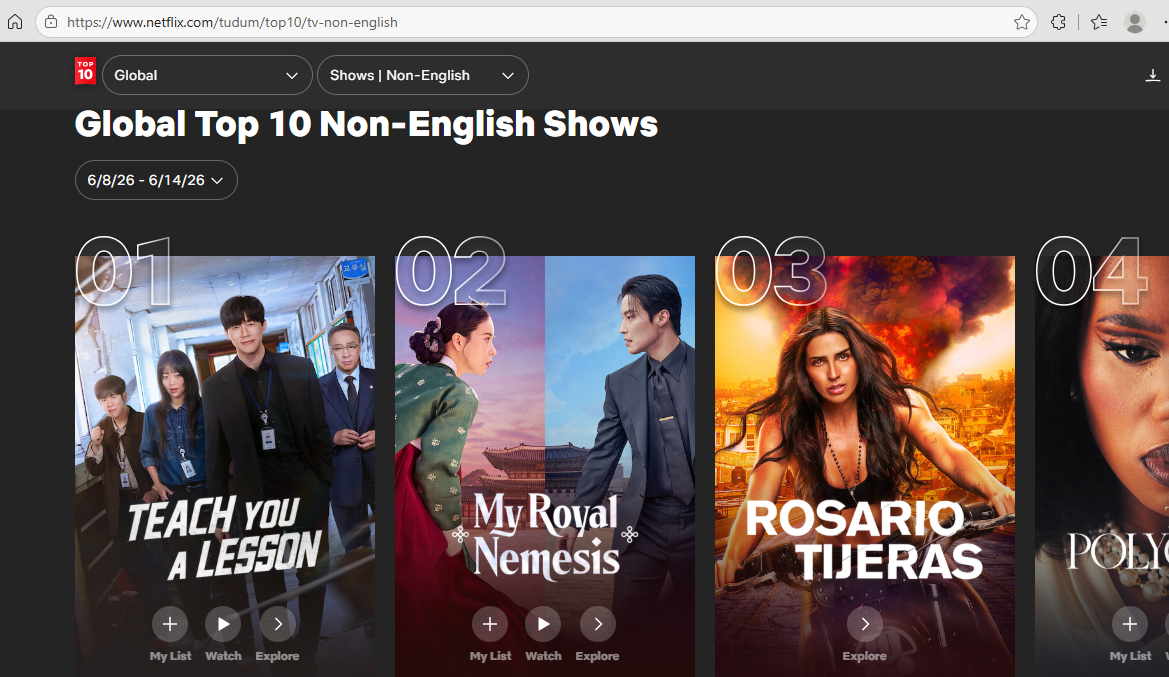
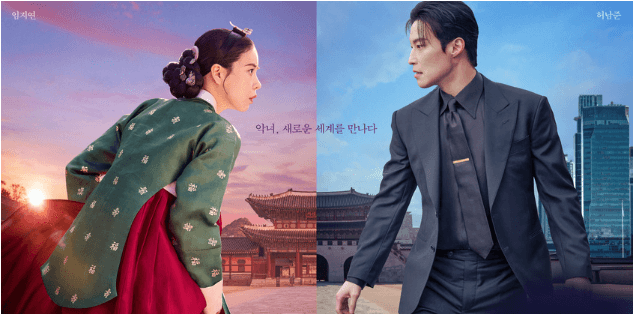
So yes, I was anxious going into the finale of My Royal Nemesis (SBS, 2026 — also streaming on Netflix). But when it was over, my first thought was:
“Okay. That actually worked.”
Here’s why — and how it compares to the shows that didn’t.
2. A Quick Note for Western Viewers — Why Fantasy K-Dramas Are Especially Hard to Stick the Landing On
If Netflix brought you to K-dramas, you might have started with Squid Game or Extraordinary Attorney Woo. Both are grounded in the real world, which makes them easy entry points.
Fantasy K-dramas are a different beast.
The formula goes like this: romance plus an impossible premise. Two leads meet across parallel worlds, time periods, game realities, or the boundary between gods and mortals. The central premise is built around a reason they can’t be together — and the whole drama is about whether they’ll find a way anyway.
The problem is that the more elaborate the premise, the harder it is to deliver a satisfying ending within that same premise. It’s like overcomplicating a chess position until there’s no good move left.
Fantasy K-drama finales tend to fail in one of three ways.
Pattern 1 — The show breaks its own rules
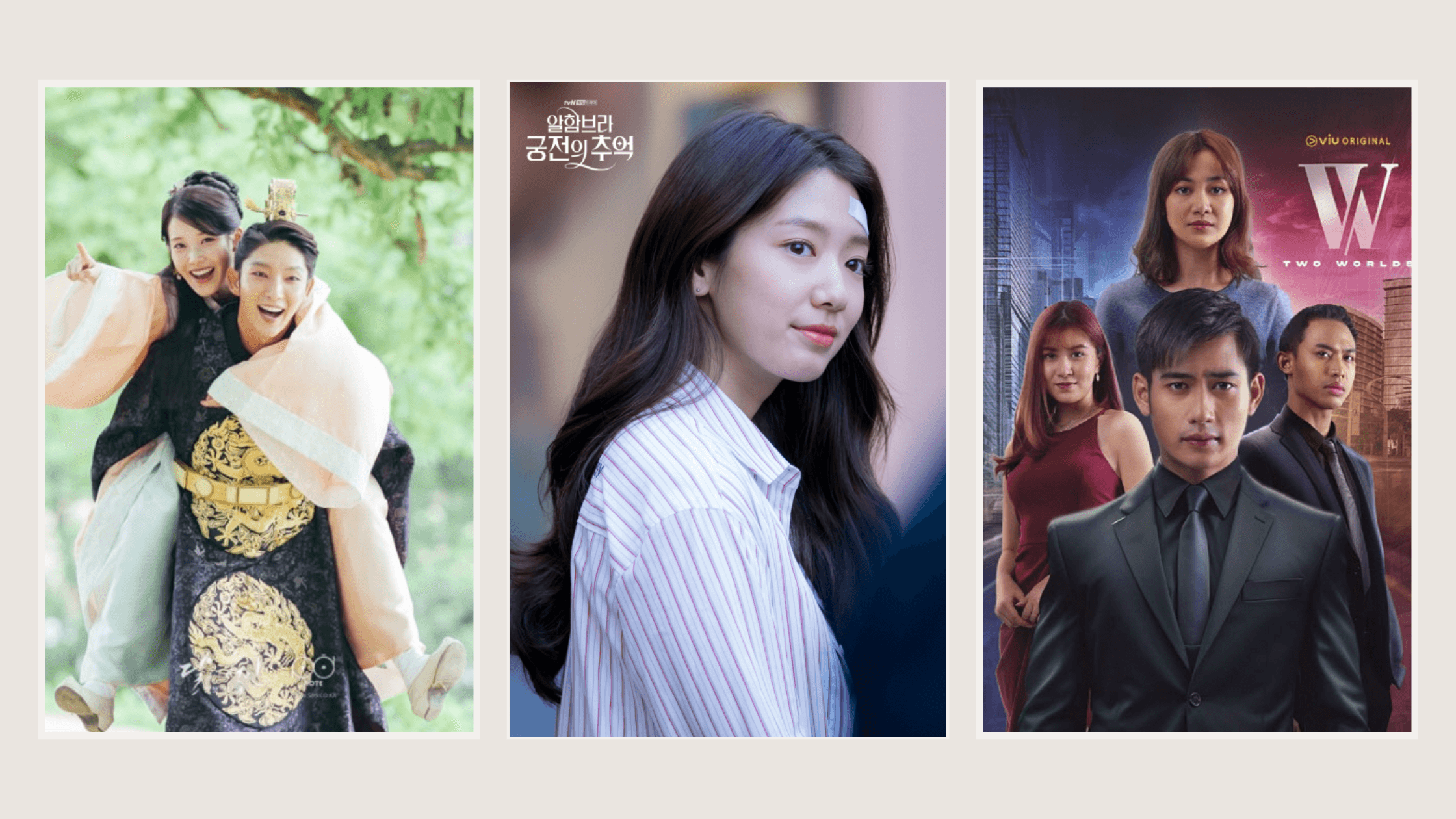
W: Two Worlds (MBC, 2016) is the classic example. The idea — a webtoon world colliding with the real world — was genuinely fresh when it aired, something like Stranger Things crossed with Who Framed Roger Rabbit. But as the show went on, its own logic kept quietly shifting. The rules changed to suit the plot, and the audience was left catching up after the story had already moved on.
Pattern 2 — Lots of setup, almost no payoff
Memories of the Alhambra (tvN/Netflix, 2018) had a premise ahead of its time — an AR game bleeding into reality, years before Ready Player One hit theaters. The first half was gripping. Then the finale arrived, and the lead character disappeared into the game with almost no explanation. Supporting characters got vague, inconclusive endings. The internet reaction at the time was basically: “Did the writer just give up?” Western viewers who remember the Lost finale will recognize the feeling.
Pattern 3 — The ending splits the fanbase down the middle
Moon Lovers: Scarlet Heart Ryeo (KBS2, 2016) followed a woman who time-slips into the Goryeo dynasty. The ending leaned tragic, and the fallout with fans who wanted a happy resolution is still talked about today. There were even rumors of a filmed alternate ending that was cut before broadcast.
3. How It Compares to The King: Eternal Monarch
The King: Eternal Monarch (MBC/Netflix, 2020) is probably familiar to international viewers — Lee Min-ho and Kim Go-eun, written by the Goblin writer, and available on Netflix. Expectations were sky-high.
It tackles parallel dimensions and time manipulation simultaneously, which in theory is ambitious. In practice, the back half of the show became increasingly difficult to follow — who was affecting whom across which timeline? The finale tried to resolve everything at once, and for many viewers, it landed more as “roughly wrapped up” than genuinely concluded.
There’s a saying Western viewers often repeat: “When the worldbuilding is more complicated than the story, you’ve already lost.” The King is a textbook case.
My Royal Nemesis made a different choice. It didn’t try to solve its fantasy premise through more worldbuilding logic. Instead, it used the fantasy elements as a language for the romance — the rules of its world existed to explain why these two people can’t be together, and the drama was about how they cross that line anyway. The result is a show you follow emotionally rather than intellectually.
4-1. How Does It Compare to Goblin — Still the Gold Standard?
Goblin (tvN, 2016–2017) is available on Netflix and has fans worldwide. It might be the high-water mark for emotional payoff in the entire fantasy K-drama genre.
The setup is elegantly cruel: a goblin (an immortal being) and the human woman who is fated to end his curse — but if she does, he disappears. The show’s tragedy is built into the premise from the very beginning, and that clarity is exactly what gives the emotion its force.
That said, Goblin’s ending is still debated. There is a reunion, but lost time can’t be recovered. “Is this actually a happy ending?” is a question fans are still asking. The show earns its tears but leaves a question mark hanging.
My Royal Nemesis takes a firmer stance: a happy ending, earned through sacrifice and choice. There’s crying, there’s a reunion, there’s the scene you’ve been waiting for — and crucially, there’s a sense that this is how it was supposed to end. It goes after both emotional satisfaction and narrative coherence, and mostly gets both.
4-2. To Be Fair — It’s Not Perfect
No honest review is all praise.
The pacing in the middle stretch — roughly episodes 7 through 9 — noticeably loses momentum. The story slows in a way that makes you wonder if this is just how the show breathes, or if something structural has stalled. I’ll admit I checked my phone a couple of times in there.
Some elements of the worldbuilding are never fully explained. If you’re the type of viewer who needs every rule accounted for by the final credits, this will leave you unsatisfied. The show makes a deliberate choice: emotional closure over logical closure.
Think of it this way — if you watched Sense8 or Dark hoping to map every thread to its source, My Royal Nemesis won’t scratch that itch. Better to know that going in than to be frustrated by it.

5. Avoiding the Trap Is Already Something
Is My Royal Nemesis the greatest fantasy K-drama ever made? I wouldn’t go that far. Whether it leaves behind a scene that gets quoted and rewatched years from now — the way Goblin or Hotel Del Luna did — is something we’ll only know with time.
But here’s what I can say:
The worldbuilding didn’t spiral out of control. The emotional payoff didn’t fail. It didn’t start strong and fall apart at the end.
If you’ve been watching the shows listed above and know exactly how hard it is to get all three of those things right in this genre — you understand why that counts for something. My Royal Nemesis got it right.
For anyone who’s been burned by a fantasy K-drama finale before: this one is worth the risk.
All images used in this post are official posters and stills provided by SBS (My Royal Nemesis), MBC/Netflix (The King: Eternal Monarch), MBC (W: Two Worlds), tvN/Netflix (Memories of the Alhambra), KBS2 (Moon Lovers: Scarlet Heart Ryeo), and tvN (Goblin).
#MyRoyalNemesis #MyRoyalNemesis2026 #KDrama #KDramaReview #FantasyKDrama #KDramaEnding #Goblin #MemoriesOfTheAlhambra #TheKingEternalMonarch #KDramaRecommendations #KoreanDrama
Image Source: My Royal Nemesis stills courtesy of SBS / Netflix press materials.
Finales are their own art form — I dig into this more in Drama Endings vs. Film Endings: Why They Fail in Different Ways.