There’s a strange emptiness that settles in after a drama ends. You stare at the screen long after the final credits roll, unwilling to leave a world that no longer exists. The characters are gone, but somehow you’re not ready to let them go. If you’ve ever binged a series until two in the morning, you know exactly what I’m talking about.
The easy answer is: because it’s entertaining. But that doesn’t quite cover it. “Entertainment” doesn’t explain why we reach for the remote on the days we feel beaten down — after a brutal meeting, a lonely dinner, or an afternoon where nothing went right. On those days, watching a drama feels less like a hobby and more like medicine.
Living the Life We Can’t
Drama characters say the things we never do. They confront their boss without flinching. They confess their feelings without hesitation. They stand up for themselves in the exact moment we would have gone quiet. And watching them do it — even knowing it’s fiction — releases something in us.
Psychologists call this vicarious satisfaction, but it goes deeper than that. When we watch a character face a moral crossroads, we’re not just spectators. We’re quietly asking ourselves: *What would I do?* The moment we feel relief, or discomfort, or that rush of righteous anger — that’s us discovering something true about our own values. Dramas are mirrors. Just more dramatic ones.
Permission to Feel
Modern life doesn’t leave much room for emotion. Adults are expected to keep it together — to process grief quickly, to stay composed under pressure, to not make a scene. But in front of a drama, different rules apply. Tearing up when the misunderstanding finally gets resolved? Completely acceptable. Cheering out loud when the villain gets what they deserve? Go ahead. Feeling your heart race during the confession scene? Nobody’s judging.
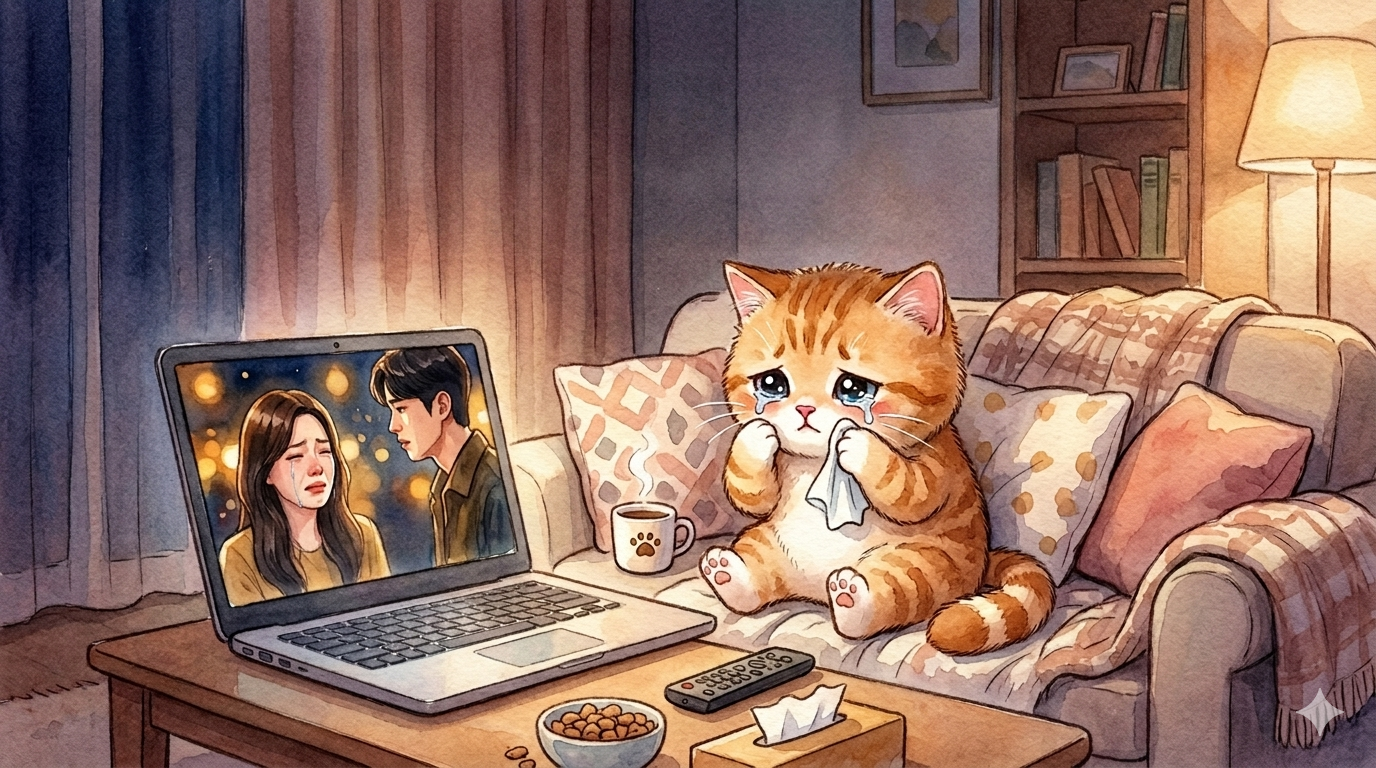
Dramas give us permission to feel things we’ve been quietly holding back. They create a safe container for emotions we don’t always know what to do with in real life. And when the episode ends, there’s often a subtle sense of release — like something that needed to come out finally did.
The Need to Connect
We may watch alone, but we don’t experience dramas alone. “Did you see last night’s episode?” is a sentence that can turn a stranger into a conversation partner within minutes. Whether the lead made the right choice, whether the villain deserves sympathy, what the ending really meant — these discussions pull people together across cubicles, group chats, and time zones.
K-dramas have made this kind of connection global. People in dozens of countries watch the same episode on the same night, feel the same knot in their chest during a tense scene, and exhale together when things resolve. Language and culture are different, but the emotions are the same. That’s not just content consumption. That’s proof that human beings are fundamentally more alike than different.
We Are Wired for Story

Long before screens existed, humans sat around fires telling stories. Cave paintings, mythology, folk tales, novels — every era has had its version of the drama. The format changes; the need doesn’t. We are, at our core, creatures who need narrative to make sense of the world.
What stories offer that real life often doesn’t is structure. There’s a beginning, a conflict, and a resolution. Problems in dramas get solved — or at least confronted. In reality, issues tend to drag on, stay unresolved, or quietly fade without closure. But in a drama, the final episode always arrives at *somewhere*. That sense of completion is deeply comforting. While the story wraps up, we get to briefly set down whatever in our own lives remains unfinished.
Proof That We’re Alive
When a drama makes your heart race, brings tears to your eyes, or leaves you grinning at your phone — that’s not a small thing. That’s aliveness. For some people, the most vivid emotional experience of their day happens in front of a screen, and that’s not something to be embarrassed about. It means something moved you. It means you’re paying attention.
We watch dramas for a dozen different reasons — to escape, to feel, to connect, to be comforted, or sometimes just because the day was long and we needed somewhere else to be. None of those reasons require justification. Dramas don’t ask why you showed up. They just begin. And somehow, every time, we find ourselves leaning in.
If you’re thinking about what draws us into dramas, you might also find this useful: Drama Endings vs. Film Endings — Why They Fail in Different Ways looks at the specific storytelling expectations we bring to the format.
#KDrama #WhyWeWatchDramas #KoreanDrama #Kdramawise #DramaLife #StorytellingPower #EmotionalWellness #StreamingCulture #KdramaLove #DramaObsessed
Sources & References:
– Zillmann, D. (1988). *Mood Management Through Communication Choices.* American Behavioral Scientist. — On how audiences use media to regulate their emotional states.
– Mar, R. A., & Oatley, K. (2008). *The Function of Fiction is the Abstraction and Simulation of Social Experience.* Perspectives on Psychological Science. — On narrative as a tool for social and emotional rehearsal.
– Green, M. C., & Brock, T. C. (2000). *The Role of Transportation in the Persuasiveness of Public Narratives.* Journal of Personality and Social Psychology. — On narrative transportation and its psychological effects.
– Korean Culture and Information Service (KOCIS). *The Korean Wave (Hallyu).* www.korea.net — On the global reach and cultural impact of K-dramas.
– Netflix. *Top 10 Global TV (Non-English).* www.netflix.com/tudum — For K-drama viewership data across international markets.